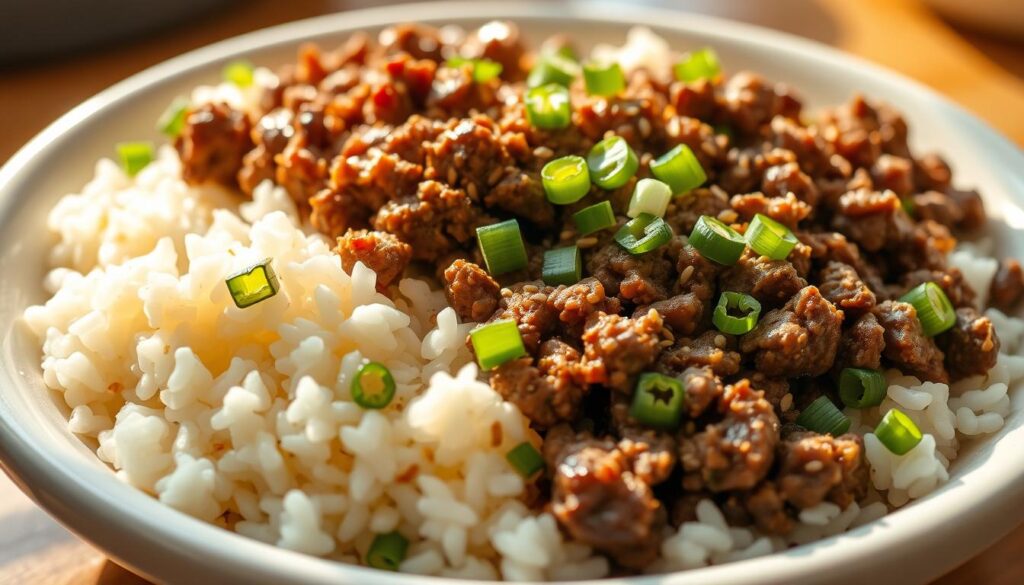
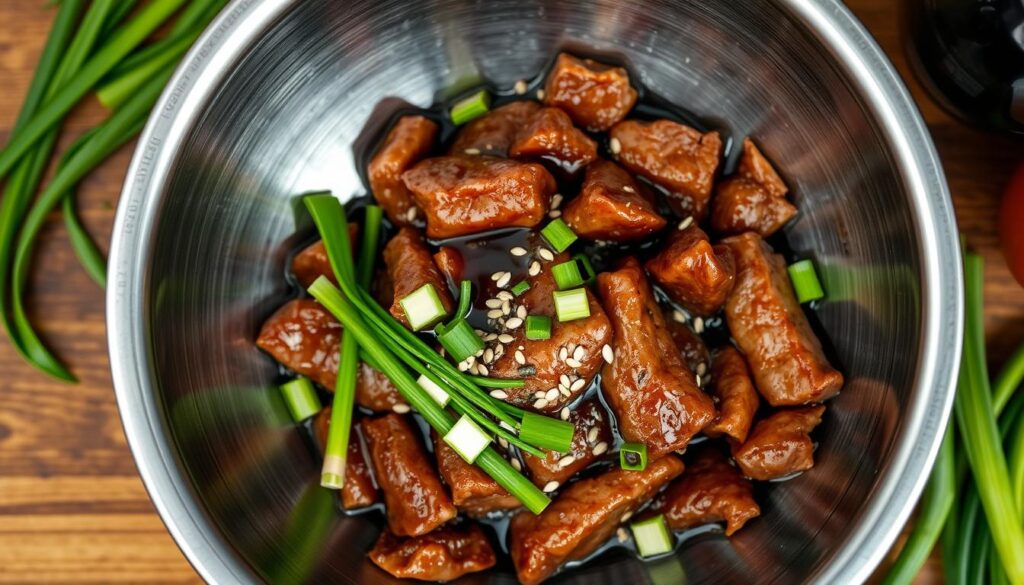
The first time I watched my grandmother make Korean beef marinade, I knew something special was happening. The smells of garlic, sesame, and soy sauce mixed together. They turned simple beef into a dish that made our whole family excited to eat.
Korean beef marinade is more than a recipe; it’s a cultural art. It shows how to mix flavors with care. You’ll see how traditional marinades add depth and complexity, making simple meat into a special meal. Whether you cook at home or love trying new recipes, learning about Korean beef marinade will change your cooking.
This guide will take you into the world of Korean marinades. You’ll learn techniques passed down through generations. You’ll see how each ingredient is important for that unique Korean BBQ taste.
Table of Contents
Key Takeaways
- Korean beef marinade combines sweet, savory, and umami flavors
- Authentic marinades use fermented ingredients for depth
- Proper marinating transforms meat’s texture and taste
- Balance of ingredients is key to traditional Korean cooking
- Marinades reflect cultural culinary philosophy
What is Korean Beef Marinade?
Korean beef marinade is a culinary art that turns regular meat into a special dish. It’s more than just seasoning. It creates a rich flavor that food lovers everywhere enjoy.
The secret of a korean beef bulgogi marinade is in its ingredients and cultural background. It’s a journey through Korean cooking traditions.
A Brief History of Korean Marinades
Korean marinades have a long history, over a thousand years old. The story of meat preparation in Korea is quite interesting:
- 900-1600 AD: Origins in Shilla and Baekje Kingdoms
- Buddhist dietary restrictions initially limited meat consumption
- Mongol invasions reintroduced meat-heavy diets
- Development of neobiani (early marinated meat cuts)
- Invention of tabletop grills revolutionized cooking techniques
Key Ingredients in Korean Beef Marinade
A real traditional korean beef marinade has key ingredients:
- Soy sauce: Provides deep, savory base flavor
- Gochujang: Adds spicy, fermented complexity
- Sesame oil: Introduces nutty, rich undertones
- Fresh garlic and ginger: Deliver aromatic intensity
- Fruit purees: Create natural sweetness and tenderize meat
Each ingredient is important for the unique taste of korean beef bulgogi marinade. It turns simple beef into a dish that excites your taste buds.
The Science Behind Marinating
Learning about the science of a korean beef marinade can make your cooking amazing. Marinating is more than just adding flavor to your meat.
Marinating involves complex chemical reactions. These reactions break down meat fibers and improve taste. When you use a korean beef marinade, many scientific processes work together to make your food delicious.
How Marinades Tenderize Meat
Meat tenderization is quite interesting:
- Enzymes from ingredients like ginger break down proteins
- Acidic parts break muscle fiber bonds
- Salt changes protein shapes
Flavor Absorption and Its Importance
Flavors in your korean beef marinade get into the meat through osmosis and diffusion. Smaller molecules like salt and sugar move quickly. They make it easier for bigger flavor molecules to get in.
How long you marinate affects the outcome. A short 3-hour soak adds basic flavor. But a 24-hour marinade changes the meat’s texture and moisture.
The right marinade doesn’t just flavor meat—it fundamentally changes its structure.
By grasping these scientific basics, you can make korean beef marinades that take your cooking to the next level.
Essential Ingredients for a Great Marinade
To make the best Korean beef marinade, you need to know the key ingredients. Each one adds something special to the dish. Together, they create a flavor that’s both deep and authentic.
When making your own Korean beef marinade, three ingredients are crucial. They work together to make a marinade that’s both tasty and true to Korean tradition.
Soy Sauce: The Umami Foundation
Korean soy sauce, or ganjang, is the heart of a great marinade. It’s different from other Asian soy sauces because it’s cleaner and sweeter. This makes the meat taste better without overpowering it.
- Choose authentic Korean soy sauce for genuine taste
- Use approximately 1 cup of marinade per pound of beef
- Provides essential salt and umami characteristics
Garlic: Aromatic Complexity
Fresh garlic makes your marinade amazing. Minced cloves add a strong, pungent flavor. This comes from the allicin compounds they release.
“In Korean cooking, garlic is not just an ingredient—it’s a culinary statement.” – Korean Cuisine Expert
Sesame Oil: Nutty Richness
Toasted sesame oil adds a unique nutty flavor to your marinade. Always use toasted varieties for the best taste and true Korean flavor.
| Ingredient | Purpose | Recommended Amount |
|---|---|---|
| Korean Soy Sauce | Umami base | 1/2 cup |
| Fresh Garlic | Aromatic complexity | 4-5 minced cloves |
| Toasted Sesame Oil | Nutty finish | 2 tablespoons |
Learning to use these three ingredients will make your homemade Korean beef marinade amazing. You’ll get restaurant-quality results in your own kitchen.
Popular Variations of Korean Beef Marinade
Korean beef marinades add a world of flavor to meat, making it extraordinary. Each marinade has its own special touch, taking your cooking to new heights. Knowing these marinades can help you make dishes that taste like they’re from a restaurant.
Explore two standout marinades: the classic Bulgogi and the spicy Gochujang. Both show the amazing depth of Korean cuisine.
Classic Bulgogi Marinade
The Bulgogi marinade is at the heart of Korean flavors. It offers a delicate mix of sweet and savory, making beef tender and fragrant. It includes:
- Soy sauce for deep umami flavor
- Asian pear for natural tenderizing
- Garlic for robust aromatics
- Sesame oil for nutty undertones
- Brown sugar for gentle caramelization
Spicy Korean Beef Marinade
The spicy marinade is for those who love a bold flavor. Gochujang, a chili paste, adds a vibrant kick. This marinade combines:
- Gochujang for complex heat
- Gochugaru (Korean red pepper flakes)
- Minced garlic
- Sesame oil
- Soy sauce
Both marinades focus on balancing flavors. They aim to bring out the beef’s natural richness and create unforgettable tastes.
How to Make a Homemade Korean Beef Marinade
Making a homemade Korean beef marinade is easier than you think. Just a few ingredients and some basic steps can turn regular beef into a dish full of Korean flavors.
The key to a great marinade is finding the right balance of flavors. You want to make the meat tender and taste amazing.
Step-by-Step Recipe for Authentic Flavor
Here’s how to make your own easy Korean beef marinade:
- Gather your core ingredients: soy sauce, garlic, sugar, and Asian pear
- Measure carefully: ¼ cup soy sauce per pound of beef
- Mince 3-4 fresh garlic cloves
- Add 2 tablespoons of sugar or honey
- Grate ¼ cup of Asian pear for natural tenderization
Customizing Your Marinade
You can make your marinade your own. Want it spicier? Add gochujang. Want it richer? Use more sesame oil. Just keep the flavors balanced.
Pro tip: Mix liquids first, then add garlic and oils. This way, flavors spread evenly and deeply.
- Adjust salt levels to taste
- Experiment with sweetness using different sugars
- Try adding maesil cheong for complex fruity notes
With practice, you’ll create your own unique marinade. The trick is knowing how each ingredient affects the taste.
Best Cuts of Beef for Marinating
Choosing the right beef cut is key to a great korean beef marinade. Knowing which cuts work best can boost your cooking skills. It ensures a tasty meal every time.
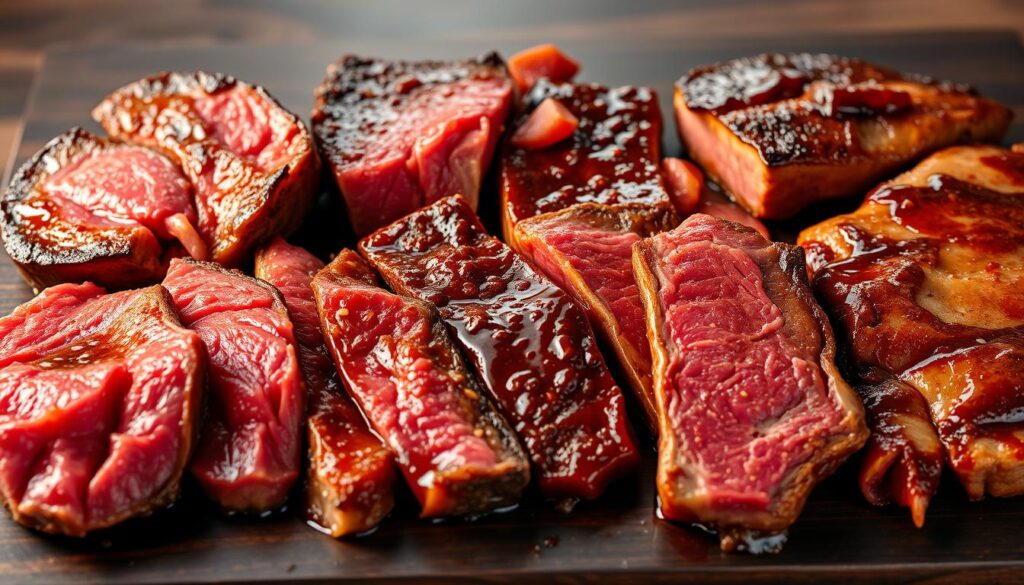
The cut of beef is crucial in a korean beef marinade. It affects the taste and texture of your dish. Different cuts bring unique qualities that can make or break your dish.
Tender Cuts: Flank and Ribeye
Premium beef cuts can greatly enhance your korean beef marinade. Here are two top picks:
- Ribeye: Known for exceptional marbling and tenderness
- Flank Steak: Robust flavor with lean muscle structure
Ribeye needs only 2-4 hours of marinating, ideal for quick meals. Flank steak does better with longer marinating and should be sliced against the grain for tenderness.
Budget-Friendly Cuts: Chuck and Skirt
Not all korean beef marinades need expensive cuts. Here are some affordable options:
- Chuck Steak: Transforms beautifully with longer marinating times
- Skirt Steak: Intense beef flavor at a moderate price point
Budget-friendly cuts like chuck and skirt steak become tender with 12-24 hours of marinating. The marinade breaks down connective tissues, making them melt-in-your-mouth.
Pro tip: Slice your beef thinly (no thicker than ⅛ inch) to ensure optimal marinade penetration and faster cooking.
Marinating Techniques for Optimal Flavor
Learning to make an authentic Korean beef marinade is all about time and technique. The right marinating process can turn regular beef into a dish that’s both flavorful and tender. It’s a true culinary delight.
When you’re making a traditional Korean beef marinade, timing is key. Different cuts of beef need different marinating methods. This ensures the best flavor and tenderness.
Marinating Time: The Flavor Sweet Spot
The marinating time depends on the beef cut:
- Tender cuts (ribeye): 2-4 hours of marination
- Tougher cuts (chuck): 12-24 hours for optimal tenderness
- Recommended minimum: 3 hours for basic flavor penetration
Refrigeration: Keeping Your Marinade Safe
Food safety is crucial when making an authentic Korean beef marinade. Always follow these important rules:
- Marinate in the refrigerator at 40°F or below
- Use non-reactive containers like glass or ceramic
- Ensure meat is fully submerged in marinade
- Turn meat periodically for even flavor distribution
Look for signs of perfectly marinated meat. It should have a slightly dark color, a tacky texture, and a rich smell. But be careful not to marinate too long. This can make the meat mushy and too salty.
Cooking Methods for Marinated Beef
Learning to cook your korean beef bulgogi marinade is key to amazing flavor and texture. Whether you love grilling or quick stir-fries, knowing the right techniques makes your dish go from good to great.
Cooking marinated beef needs precision and knowing how to handle heat. Grilling and stir-frying are the top methods for cooking your Korean-style meat.
Grilling: Achieving That Perfect Char
Grilling turns your korean beef bulgogi marinade into a smoky, caramelized treat. Here are some must-know tips:
- Preheat your grill to high heat
- Use a clean, oiled grate to prevent sticking
- Cook thin slices quickly (2-3 minutes per side)
- Look for beautiful golden-brown edges
Stir-Frying: Quick and Flavorful
Stir-frying is a fast way to enjoy your best korean beef marinade recipe. Here are some important techniques:
- Heat wok until just smoking
- Use minimal oil (1-2 tablespoons)
- Cook beef in small batches
- Avoid overcrowding the pan
Pro tip: The secret to perfect Korean beef is maintaining high heat and cooking quickly to preserve the marinade’s complex flavors.
Pairing Suggestions for Korean Beef Dishes
Creating the perfect meal with your sweet and savory Korean beef marinade is more than just cooking the meat. The right sides can make your meal unforgettable. Korean food is all about balance, texture, and flavors that work well together.
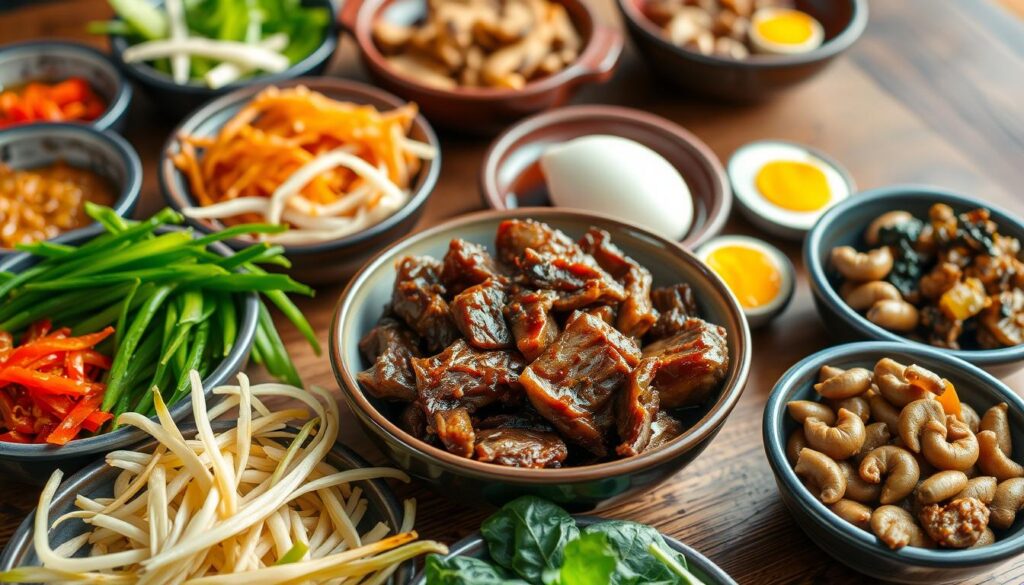
When serving your marinated beef, think about these perfect side dishes. They will turn your meal into a true Korean feast:
- Kimchi: The quintessential Korean side dish provides a tangy, spicy contrast to the rich beef
- Steamed white rice: A neutral base that absorbs the delicious sweet and savory korean beef marinade
- Fresh lettuce leaves: Perfect for creating traditional ssam (wrap) style eating
- Seasoned vegetable banchan like spinach or bean sprouts
- Grilled onions caramelized in beef drippings
Complementary Sauces to Enhance Your Dish
Elevate your Korean beef experience with these incredible dipping sauces. They add extra layers of flavor:
- Ssamjang: A thick, savory paste perfect for lettuce wraps
- Gochujang and sesame oil mixture: Adds spicy depth to your meal
- Simple soy sauce with scallions: A clean, classic accompaniment
By choosing these side dishes and sauces, you’ll make a memorable Korean dining experience. It will celebrate the rich, complex flavors of your marinated beef.
Storing Leftover Marinade
Storing your homemade Korean beef marinade right is key to keeping flavors strong and food safe. Knowing how to store leftover marinade can make your cooking better and safer.
Safe Storage Practices
When you make a homemade Korean beef marinade, safety is top priority. Marinade that touches raw meat needs extra care:
- Never reuse marinade that has contacted raw beef without boiling for at least 5 minutes
- Always set aside a portion of marinade before adding raw meat if you plan to use it as a sauce
- Store unused marinade in airtight glass containers
- Refrigerate for up to one week
Creative Uses for Extra Marinade
Turn leftover homemade Korean beef marinade into tasty dishes:
- Reduce used marinade by half to create a glossy finishing sauce
- Incorporate into stir-fry sauces for vegetables or tofu
- Use as a flavor base for fried rice
- Brush on vegetables before grilling
- Thin with broth to create a flavorful soup base
Pro tip: Label your stored marinade with the date and contents to track freshness and maximize your cooking creativity.
Common Mistakes to Avoid
Making the perfect korean beef marinade needs care and knowledge. Many home cooks unknowingly ruin their dishes by making big mistakes. These mistakes can mess up the flavor and texture.
The Dangers of Over-Marinating
Marinating beef too long can make it tough. When meat stays in the marinade for too long, bad things happen:
- Protein structures break down too much
- Meat gets mushy and stringy
- Too much salt makes it taste bad
- It becomes sticky and easy to burn
Pro tip: Limit marinating time to 4-24 hours depending on the cut of beef.
Ingredient Omissions and Flavor Impact
Not using all the right ingredients can change how your marinade tastes. Each ingredient has its own role:
- Fresh garlic adds complex, pungent notes
- Sesame oil gives a nutty aroma
- Fruit purees help tenderize the meat
- Ginger adds a spicy-sweet flavor
Knowing these details helps your marinade taste like it’s from a restaurant. Being precise is more important than taking shortcuts for authentic Korean flavors.
Conclusion: Enjoying Your Korean Beef Marinade
Learning to make Korean beef marinade is a tasty adventure. You’ll turn simple beef into a dish that’s truly special. Every step, from picking the right ingredients to mastering marinating, helps you make dishes like a pro.
The secret to a great marinade is its mix of sweet, savory, and umami flavors. Use real garlic, top-notch Korean soy sauce, and fresh fruits. Thinly slice the beef and cook it fast to get those perfect caramelized edges.
Final Tips for Delicious Results
Remember, patience is crucial when making Korean beef marinade. Let the flavors soak into the meat. Try different fruit purees and adjust the spice level. Your unique twist will make the dish unforgettable.
Encouragement to Experiment
Every chef begins by following recipes and then adds their own flair. Your Korean beef marinade is your chance to express yourself. Start with the basics, then let your creativity run wild. Your homemade Korean beef will impress anyone.