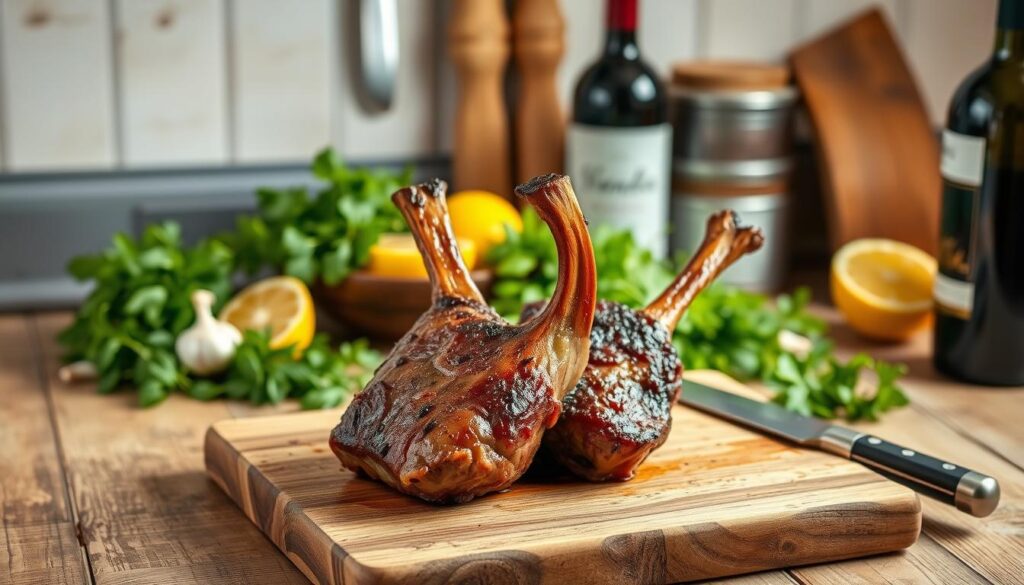
how to cook beef shank in 30 minutes my grandmother turn a beef shank into beef osso buco was magical. It showed me cooking is more than recipes—it’s about making magic. This classic Italian dish might seem hard, but with the right steps, you can make it just like a restaurant.
أوسو بوكو تعني “عظمة مثقوبة” بالإيطالية. إنه تقليدٌ يُحوّل المكونات البسيطة إلى وجبة مميزة. على الرغم من أنها تُحضّر عادةً من لحم العجل، إلا أن سيقان البقر خيارٌ رائعٌ للطهاة المنزليين في الولايات المتحدة.
This guide will teach you how to make authentic beef osso buco. It will impress your loved ones. We’ll cover everything from picking the right cut to braising it perfectly.
Table of Contents
Key Takeaways
- Beef osso buco transforms affordable beef shanks into a gourmet meal
- Proper braising techniques are crucial for tender, flavorful meat
- The dish originated in Italy’s Lombardy region
- Marrow from the bone creates a luxurious sauce
- Home cooks can easily replicate restaurant-quality results
Introduction to Cooking Beef Shank
Beef shank is a special cut that makes any meal stand out. It’s a key to cooking like a pro at home. With it, you can create dishes that taste like they came from a fancy restaurant.
Exploring beef osso buco is a journey for home cooks. It’s a meat that’s both tough and rewarding. It offers rich flavors and the chance to make dishes that are tender and delicious.
What is Beef Shank?
Beef shank is from the lower leg of a cow. It has a unique shape and is filled with marrow. This cut is known for its:
- Thick, muscular texture
- High concentration of connective tissue
- Rich collagen content
The special makeup of Italian beef shank is ideal for slow cooking. Braising breaks down the tough parts, making the meat tender. It also brings out deep, complex flavors.
Overview of Osso Buco
Beef osso buco is a beloved Italian dish from Lombardy. It turns a cheap cut into a fancy meal with slow cooking.
| Characteristic | Beef Osso Buco Details |
|---|---|
| Origin | Lombardy, Italy |
| Cooking Method | Slow braising |
| Key Ingredients | Beef shank, vegetables, wine, broth |
| Flavor Profile | Rich, tender, deeply savory |
To master beef osso buco, you need to know its special traits. You also have to be patient with slow cooking. This unlocks its amazing taste and texture.
Selecting the Right Beef Shank
Creating the best beef shank recipe begins with picking the right meat. Knowing the differences in beef shanks can make your osso bucco stand out. Whether you’re cooking at home or love to experiment in the kitchen, choosing the right beef shank is key. It ensures your dish will wow your guests.
Types of Beef Shank Cuts
Beef shanks come from two main parts of the cow:
- Foreshank: Cut from the front leg of the cow
- Hindshank: Cut from the back leg of the cow
Both cuts are great for osso bucco, but they differ slightly in texture and taste. Look for cross-cut sections that are 1.5 to 2 inches thick. The bone and marrow should be visible in the center.
Factors to Consider When Choosing Beef
When searching for the perfect beef shank, remember these important points:
- Seek out well-marbled meat with visible fat streaks
- Opt for bone-in cuts for richer flavor
- Go for shanks from younger cattle (around 30 months)
- Consider grass-fed options for better nutrition
“The quality of your beef shank determines the success of your entire dish.” – Professional Chef
Grass-fed beef shanks are packed with nutrients like omega-3 fatty acids and vitamin E. Specialty meat providers like Acabonac Farms offer high-quality, grass-fed options. These can take your tender beef shank recipe to the next level.
Pro tip: Always call ahead to local butcher shops or specialty markets. Beef shanks often need special ordering and might not be found in regular grocery stores.
Essential Ingredients for Osso Bucco
To make a true Italian beef shank dish, you need the right ingredients. These ingredients add layers of flavor. They turn a simple dish into a memorable meal.
Start by picking the best ingredients for your osso bucco. These will make your braised beef shank truly special.
Fresh Herbs and Spices
The dish’s flavor comes from its herbs:
- Fresh herbs: Rosemary sprigs (3-4)
- Fresh thyme sprigs (10-12)
- Dried bay leaves (2)
- Dried oregano
- Kosher salt
- Freshly ground black pepper
Vegetables and Aromatics
The soffritto is the base of your dish:
- Carrots (3 large, diced)
- Celery (2-3 stalks, finely diced)
- Yellow onion (1 large, finely diced)
- Garlic cloves (8 for braising, 1 for gremolata)
Other key ingredients for your Italian beef shank are:
- Olive oil
- Butter
- Flour for dredging
- Tomato paste (4.6 ounces)
- Crushed tomatoes (1 cup)
- Beef broth (1-2 cups)
Use a medium-bodied red wine like Chianti or Merlot. It adds depth to the braising liquid and tenderizes the meat.
Gremolata Garnish
Finish your dish with a fresh gremolata. It balances the richness of the meat:
- Fresh parsley (1/3 cup, chopped)
- Lemon zest
- Orange zest
- Minced garlic
Preparing the Beef Shank
Learning to cook beef shank starts with the right prep. The right steps turn this tough cut into a tender, delicious dish. It will wow even the pickiest eaters.
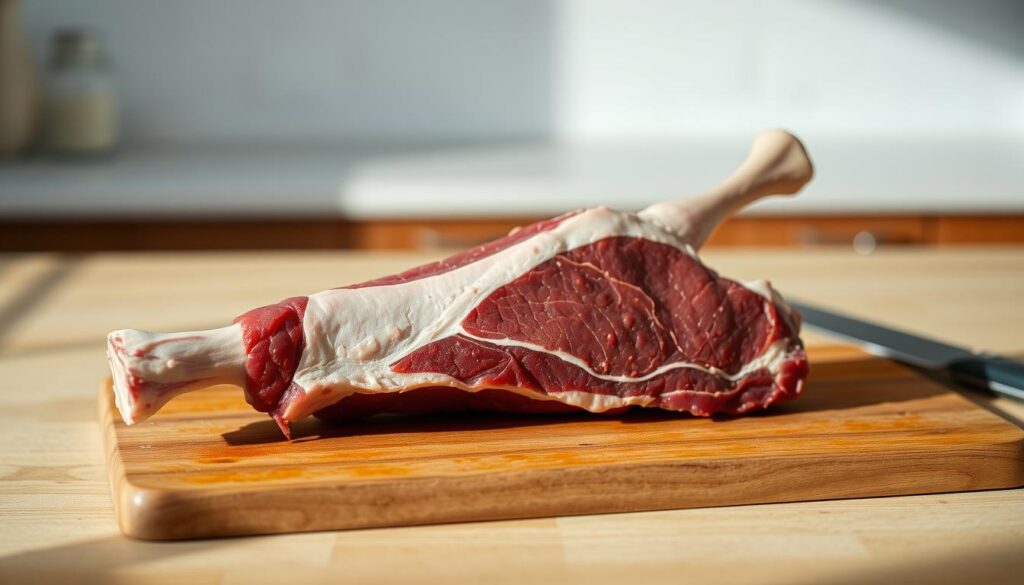
Before cooking, a few key steps make your beef shank tender and tasty.
Essential Preparation Techniques
- Remove beef shanks from refrigerator 30-60 minutes before cooking
- Pat meat completely dry with paper towels
- Trim excess fat and connective tissue
- Snip outer membrane in 4-5 spots to prevent curling
Seasoning for Maximum Flavor
Seasoning is key for a tender beef shank. Use kosher salt and black pepper to boost the meat’s flavor.
| Seasoning Step | Recommendation |
|---|---|
| Salt Quantity | 1 teaspoon per pound of meat |
| Pepper | Freshly ground, to taste |
| Optional Coating | Light dusting of flour for enhanced crust |
Pro tip: Shake off extra flour to avoid a sticky crust. Tying the shank keeps it in shape while it cooks.
By using these prep methods, you’ll make a beef shank that’s restaurant-quality. It will be tender and full of rich flavors.
Browning the Beef Shank
Turning a simple braised beef shank into a masterpiece starts with browning. This step lays the flavor foundation, making your osso bucco truly special.
The science behind browning is fascinating. When high heat meets protein, it triggers the Maillard reaction. This reaction creates complex flavors that make meat taste rich and deep.
Why Browning Matters
Browning does several important things when cooking a braised beef shank:
- It locks in the meat’s juices
- It creates a caramelized exterior
- It makes fond – flavorful browned bits
- It adds depth and complexity to the dish
Techniques for Perfect Browning
Here are some expert tips for achieving perfect browning:
- Use a heavy-bottomed pot or cast-iron skillet
- Heat 2-3 tablespoons of olive oil until shimmering
- Ensure meat sizzles immediately when added
- Sear each side for 4-5 minutes without moving
- Brown all sides, including edges
Pro tip: Work in batches to keep the heat high and avoid steaming. Aim for a deep, golden-brown crust. This crust seals in flavor and makes your beef shank look stunning.
Making the Base for Osso Bucco
Creating a flavorful base is key for an authentic Italian beef shank dish. The heart of beef osso buco is in rich, complex flavors. These come from precise cooking techniques.
Sautéing Aromatic Vegetables
After browning your Italian beef shank, turn the pot into a flavor powerhouse. Make a traditional soffritto, a classic base that needs patience and detail:
- Add olive oil to the pot after removing browned meat
- Reduce heat to medium
- Dice carrots, celery, and onions uniformly
- Season with kosher salt and black pepper
“The secret to an exceptional beef osso buco is developing deep, caramelized flavors through slow cooking.” – Chef Mario Batali
Developing Intense Flavor Profiles
Your soffritto should cook for 15-20 minutes. It will turn from raw vegetables to a golden-brown, intensely flavored base. The goal is to create a caramelized foundation that will elevate your beef osso buco.
| Ingredient | Quantity | Cooking Time |
|---|---|---|
| Carrots | 1 cup, diced | 15-20 minutes |
| Celery | 1 cup, diced | 15-20 minutes |
| Onions | 1 cup, diced | 15-20 minutes |
Next, add minced garlic and tomato paste, cooking for 2-3 minutes until fragrant. Then, deglaze the pot with one cup of Chianti or Merlot. This step ensures every bit of flavor is captured in your beef osso buco.
Braising the Beef Shank
Turning a tough beef shank into a tender dish takes patience and care. The braising process makes this meat tender and delicious, right in your kitchen.
Knowing the right cooking time is key for a tender beef shank. Different methods help create a tasty osso bucco.
The Braising Process Explained
Braising is a special cooking method that softens tough meat. Your beef shank will change in amazing ways through these steps:
- Nestle browned shanks into a deep pot
- Cover meat three-quarters with flavorful braising liquid
- Maintain a gentle, barely bubbling simmer
- Keep the pot covered to trap moisture
Cooking Time and Temperature Guidelines
| Cooking Method | Temperature | Cooking Time |
|---|---|---|
| Stovetop | Low Simmer | 3-3.5 hours |
| Oven | 325°F | 2-3 hours |
| Slow Cooker | Low | 7-9 hours |
| Instant Pot | High Pressure | 40 minutes |
Pro tip for braised beef shank perfection: Your meat is done when it falls apart with minimal pressure from a fork. Spoon the braising liquid over the shanks every hour to ensure maximum juiciness and flavor development.
The key to exceptional osso bucco is patience and maintaining a consistent, gentle cooking temperature.
Final Cooking Techniques
Mastering the final stages of cooking beef shank is key to a tender and flavorful Osso Bucco. The right techniques can make your dish go from good to amazing. Every bite will be filled with rich, deep flavors.
Adding Vegetables for Texture and Flavor
When cooking your beef shank, think about how to add vegetables:
- Add fresh diced carrots 45 minutes before cooking ends
- Preserve vegetable texture by adding them late
- Let soffritto vegetables melt into the sauce
Monitoring Liquid Levels During Cooking
It’s important to manage liquid levels for tender beef shank. Check your pot every 45-60 minutes to keep the right moisture.
| Cooking Stage | Liquid Management Technique |
|---|---|
| Initial Braising | Keep shanks 3/4 submerged in liquid |
| Mid-Cooking | Add beef stock in half-cup increments if needed |
| Final Stage | Baste meat with cooking juices regularly |
Sauce Refinement Techniques
To improve your beef shank cooking, follow these sauce steps:
- Remove bay leaves and herb bundles
- Skim excess fat from cooking liquid
- Reduce sauce in a separate pan if needed
- Create a cornstarch slurry for thickening
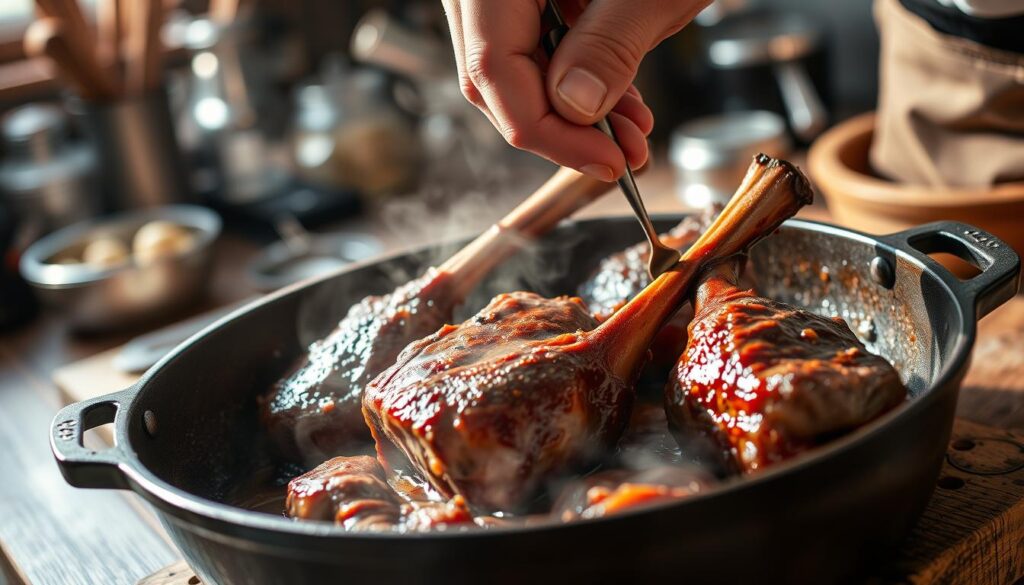
The last step is to taste and adjust seasonings. Sprinkle salt and pepper to balance the flavors. This will make your Osso Bucco unforgettable, showing off the tender beef shank.
Serving Suggestions for Osso Bucco
Your best beef shank recipe deserves a stunning presentation. Beef osso buco is a dish that can turn any meal into a special event. The secret to serving it well is in the right sides and how you present it.
Traditional Italian Pairings
Beef osso buco is best with certain sides that match its rich taste. The classic choices are:
- Risotto alla Milanese (saffron-infused risotto)
- Creamy polenta
- Fresh pappardelle pasta
- Smooth mashed potatoes
Creative Serving Techniques
Here are some ways to make your beef shank recipe stand out:
- Put the osso buco on a bed of your favorite starch
- Drizzle the rich sauce all over
- Add gremolata (parsley, lemon zest, garlic mix)
- Optional: Sprinkle with grated Parmigiano-Reggiano
Wine and Side Dish Pairings
| Wine Pairing | Side Dish | Flavor Profile |
|---|---|---|
| Chianti | Saffron Risotto | Rich, Medium-Bodied |
| Barolo | Creamy Polenta | Robust, Intense |
| Merlot | Pappardelle Pasta | Smooth, Balanced |
A simple arugula salad with lemon vinaigrette is a great contrast to the rich osso buco. Serve with crusty Italian bread to catch every bit of sauce.
Storing and Reheating Leftovers
After making a tasty braised beef shank, you might wonder how to keep it fresh. The good news is that Osso Bucco gets even better with time. It’s perfect for meal prep and enjoying leftovers.
Proper Storage Techniques
Learning how to cook beef shank means knowing how to store it right. This keeps the flavor and ensures food safety. Here are some important storage tips:
- Cool the Osso Bucco to room temperature within two hours of cooking
- Store in an airtight container
- Keep meat submerged in sauce to prevent drying
- Store gremolata separately to maintain freshness
Storage Duration and Methods
| Storage Location | Duration | Recommended Practices |
|---|---|---|
| Refrigerator | 3-4 days | Keep in sealed container |
| Freezer | Up to 3 months | Use freezer-safe container |
Reheating Methods for Best Results
When reheating your braised beef shank, focus on keeping it flavorful and tender:
- Stovetop method: Reheat in pot over medium heat
- Oven method: Cover with foil, heat at 325°F for 30-40 minutes
- Microwave: Use 50% power, stir frequently
Pro tip: Add a splash of beef stock if the sauce becomes too thick during reheating. Always ensure the meat is heated thoroughly before serving.
By using these storage and reheating tips, your Osso Bucco will stay delicious and safe. This makes it easy to enjoy this classic dish again and again.
Variations on the Classic Osso Bucco Recipe
Trying new ways to make osso bucco can turn your kitchen into a fun place. You can mix up ingredients and cooking methods. This keeps the dish’s heart while adding new tastes.
If you can’t find beef shanks, try beef short ribs or chuck roast. Cooking beef shank in a slow cooker is easy. It takes 4-5 hours on high or 7-9 hours on low for tender meat.
For quick cooking, use an instant pot. It cooks the meat in 40 minutes with a natural release. Try different wines like Merlot or Cabernet Sauvignon for extra flavor.
Grass-fed beef makes the dish taste better and is healthier. Add orange peel, balsamic vinegar, or olives to make it your own. Each twist tells a new story while keeping the dish’s Italian roots.
Regional Adaptations
Italian areas have their own osso bucco styles. Some use veal shanks with white wine for a lighter taste. Try changing the vegetables or braising liquid to explore different flavors.
Flavor Enhancements
Make your dish stand out with creative touches. Add citrus zest, Mediterranean ingredients, or unique herbs. The goal is to add bold flavors without losing the dish’s essence.