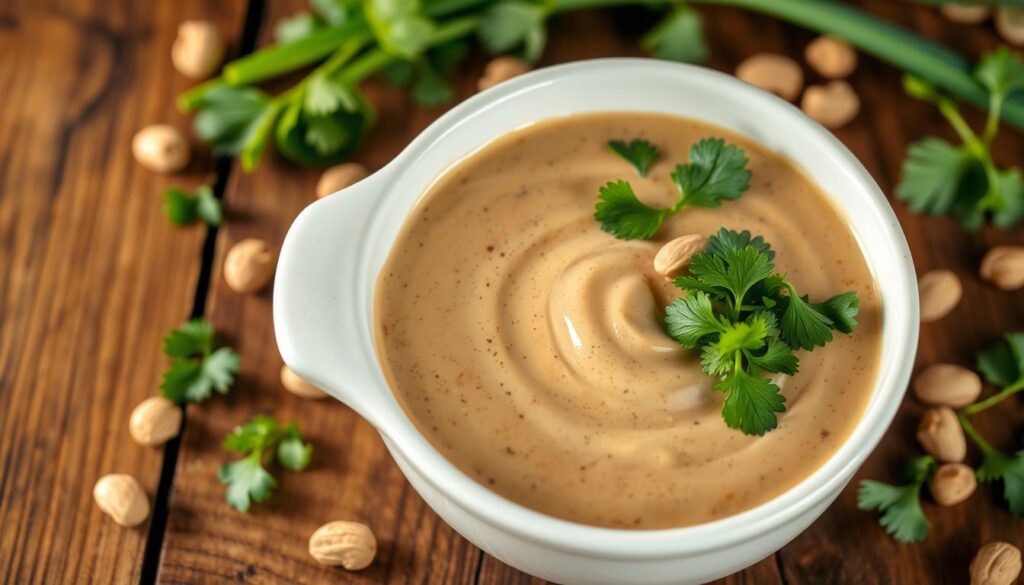
how to make peanut sauce wanted a sauce that makes simple meals special? I found my answer in a quick peanut sauce during a busy week. This homemade sauce is your new secret in the kitchen.
Making peanut sauce is more than a skill; it’s a lifesaver for busy cooks. With simple ingredients, you can make a sauce that tastes like a restaurant’s in just minutes.
This sauce is perfect for adding flavor to stir-fries, dips, or grain bowls. The best part? You’ll save money and know exactly what’s in your sauce.
Table of Contents
Key Takeaways
- Create a versatile sauce in under 10 minutes
- Use basic pantry ingredients
- Customize flavor to your taste preferences
- Elevate multiple types of dishes instantly
- Save money compared to store-bought sauces
Why This Peanut Sauce Will Become Your Kitchen Staple
Imagine a flavor-packed peanut sauce that turns simple meals into amazing dishes. This natural peanut butter sauce is more than a condiment. It’s a kitchen game-changer that will change how you cook.
This sauce is special because it’s versatile and has the perfect taste. Every spoonful is a mix of creamy, tangy, and spicy flavors. It makes any dish go from ordinary to extraordinary.
The Perfect Flavor Symphony
A great peanut sauce has many flavors:
- Creamy richness from natural peanut butter
- Bright tanginess from fresh lime juice
- Umami depth from quality soy sauce
- Warming heat from chili sauce
Natural Peanut Butter: The Secret Ingredient
Your best peanut sauce recipe needs natural peanut butter. It’s pure and unadulterated. Unlike regular brands, natural peanut butter makes your sauce silky and perfect for drizzling.
“Natural peanut butter isn’t just an ingredient – it’s the foundation of an amazing sauce.”
Choosing the right peanut butter opens up a world of flavors. It will keep your meals exciting and your taste buds happy.
The History and Cultural Roots of Peanut Sauce
The story of peanut sauce starts in Southeast Asia’s lively food scene. In Indonesia, it’s called sambal kacang. This sauce turns simple meals into unforgettable dishes.
In Indonesia, especially Java and Bali, cooks made this sauce from roasted peanuts. They ground them by hand. This sauce was more than just a flavor; it was a way to share traditions.
- Originated in Indonesian cuisine
- Hand-ground roasted peanuts as primary ingredient
- Essential to dishes like satay and gado-gado
As people shared recipes, peanut sauce went beyond Indonesia. Each place added its own twist. In Thailand, it gets creamy with coconut milk. In the U.S., it’s zesty with lime and chili garlic.
| Region | Peanut Sauce Characteristics |
|---|---|
| Indonesia | Traditional hand-ground, pure peanut base |
| Thailand | Creamy with coconut milk addition |
| United States | Zesty with lime and chili garlic sauce |
Now, peanut sauce is loved worldwide. Whether you make a classic satay or try something new, you join a global food tradition.
Essential Ingredients for the Best Peanut Sauce
Making a great peanut sauce begins with knowing its key ingredients. The right mix can turn a simple sauce into a dish that wows. It takes your meals from good to amazing.
Choosing the Right Peanut Butter
Start with natural peanut butter for the best sauce. Choose brands with just peanuts and salt. Avoid those with sugars or hydrogenated oils. Creamy peanut butter makes a smooth sauce, while crunchy adds texture.
- 100% peanuts with no additives
- Creamy texture preferred
- No added sugars or oils
Fresh Versus Powdered Seasonings
Fresh garlic and ginger give the best flavors. Tip: Freeze ginger and grate it frozen for easy use.
| Ingredient | Fresh Option | Powdered Alternative |
|---|---|---|
| Garlic | Minced fresh cloves | Garlic powder |
| Ginger | Freshly grated | Dried ginger powder |
Understanding Asian Hot Sauces and Chili Pastes
Add heat with sambal oelek or sriracha sauce. Each has its own level of heat. Rice vinegar adds a tangy touch that balances the peanut butter.
- Sambal oelek: Intense chili paste
- Sriracha sauce: Slightly sweet heat
- Rice vinegar: Adds bright acidity
Try different ingredients to make a peanut sauce that suits your taste.
How to Make Peanut Sauce
Making the perfect peanut sauce is easy. Just a few ingredients and the right steps can make a tasty sauce in minutes.
- 1/2 cup natural peanut butter
- 1/4 cup soy sauce
- 2 tablespoons rice vinegar
- 2 cloves fresh garlic, minced
- 2 tablespoons sesame oil
- 1/4 cup hot water
Start by mixing peanut butter with hot water until it’s smooth. This makes the base creamy and easy to blend.
For the best results, blend all ingredients in a blender. Pulse until it’s smooth and well mixed. If you like a chunkier sauce, whisking by hand is great.
Pro tip: Taste and adjust the sauce as you like. Add honey for sweetness or chili sauce for heat. Homemade peanut sauce is very versatile!
It takes only 5-10 minutes to make. This makes it a quick and easy addition to your cooking.
Tips for Achieving the Perfect Consistency
Mastering peanut sauce consistency can make your dishes amazing. You might want a thin sauce for noodles or a thick one for spring rolls. Knowing how to change the texture is crucial.
The secret to your perfect sauce is in the ingredients. Recipes need different textures. A runny sauce is great for noodles, while a thick sauce sticks to spring rolls.
Adjusting Thickness Like a Pro
Getting the right sauce thickness is simple. Here are some tips:
- For a thin sauce: Add warm water slowly
- To thicken: Mix in more peanut butter
- Adjust in small steps
- Stir well after each change
Temperature’s Critical Role in Sauce Mixing
Temperature is key for smooth sauce. Warm ingredients blend better, making your sauce silky and top-notch.
Pro tip: Peanut sauce thickens in the fridge. Warm it up and stir to get it right again.
The key is patience and small steps to get your sauce just right.
Customizing Your Peanut Sauce to Your Taste
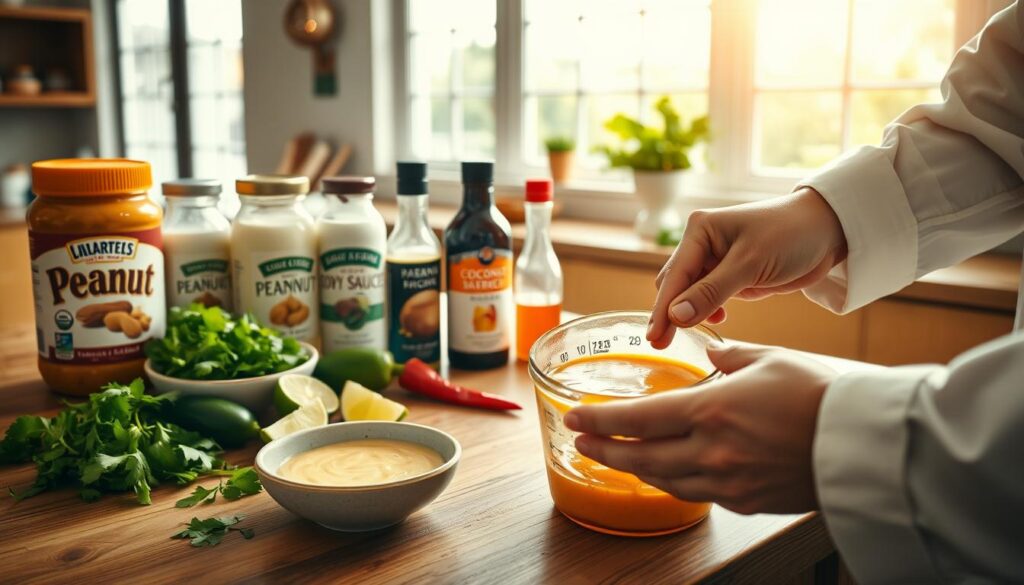
Making your own peanut sauce is a fun journey. It turns a simple recipe into your own special sauce. You can make it just how you like it.
Begin by tasting your peanut sauce. Think about these changes to make it your own:
- Brightness: Add more lime juice for a zesty kick
- Depth: Incorporate extra soy sauce for a richer flavor
- Heat: Increase spicy elements with chili garlic sauce or Sriracha
- Sweetness: Adjust sugar levels to balance tangy ingredients
When tweaking the flavor, remember to add a little at a time. Taste after each change. This helps avoid making the sauce too strong. For a spicy sauce, add hot sauce slowly, tasting as you go.
Pro tip: Keep a notes journal of your changes. This way, you can make your perfect sauce every time. Whether you want it mild for kids or extra-garlicky, your sauce can be anything you dream.
Creative Ways to Use Peanut Sauce in Your Meals
Peanut sauce is a versatile culinary superhero. It can turn ordinary meals into extraordinary ones. From quick weeknight dinners to impressive appetizers, this sauce offers endless possibilities.
Discover the incredible range of peanut sauce uses. Whether you’re a busy home cook or a passionate food enthusiast, these creative applications will inspire your next meal.
A Delightful Peanut Dipping Sauce for Vegetables and Appetizers
Transform your snack time with a delicious peanut dipping sauce. It elevates simple ingredients. Perfect for fresh vegetables like:
- Crisp carrots
- Crunchy cucumber sticks
- Sweet bell pepper slices
- Tender snap peas
Your peanut sauce works magic with appetizers such as spring rolls, chicken satay, and even crispy tofu. The creamy texture and rich flavor make every bite irresistible.
Drizzling Over Rice and Grain Bowls
Make your grain bowls sing with a generous drizzle of peanut sauce. Choose from bases like quinoa, brown rice, or cauliflower rice. Then top with roasted vegetables and your favorite protein.
| Grain Base | Protein | Vegetables |
|---|---|---|
| Quinoa | Grilled chicken | Roasted broccoli |
| Brown rice | Baked tofu | Sautéed mushrooms |
| Cauliflower rice | Shrimp | Roasted sweet potatoes |
Thai Peanut Noodles for Quick Dinners
Create restaurant-quality thai peanut noodles in minutes. Select your favorite noodles – rice noodles, soba, or even zucchini noodles work perfectly. Toss with peanut sauce and add fresh vegetables for a complete meal.
Your homemade peanut sauce can be used hot or cold. It’s a year-round culinary companion that brings excitement to any dish.
Storing and Preserving Your Homemade Peanut Sauce
Storing peanut sauce right is key to keeping its great taste and ensuring it’s safe to eat. After making your homemade sauce, you’ll want to keep its flavor and quality for the best experience.
Here’s how to store peanut sauce in the fridge:
- Use an airtight glass container for storage
- Transfer sauce to a clean, sealed jar
- Keep refrigerated for maximum freshness
Your peanut sauce can last 5 to 7 days in the fridge if stored properly. It might get thicker when it’s cold. Just warm it up and stir it well to get it smooth again.
Freezing peanut sauce is a great way to keep it longer. Here’s what to do:
- Pour sauce into freezer-safe containers
- Leave slight room for expansion
- Freeze for up to 3 months
- Thaw overnight in the refrigerator
Look out for signs of spoilage like bad smells, weird colors, or mold. If you’re unsure, it’s best to throw it away and make a new batch.
Pro tip: Label your storage containers with the date of preparation to track freshness!
Vegan and Gluten-Free Adaptations
Making a vegan peanut sauce that everyone can enjoy is easy. You can make it gluten-free and safe for those with allergies by making a few changes.
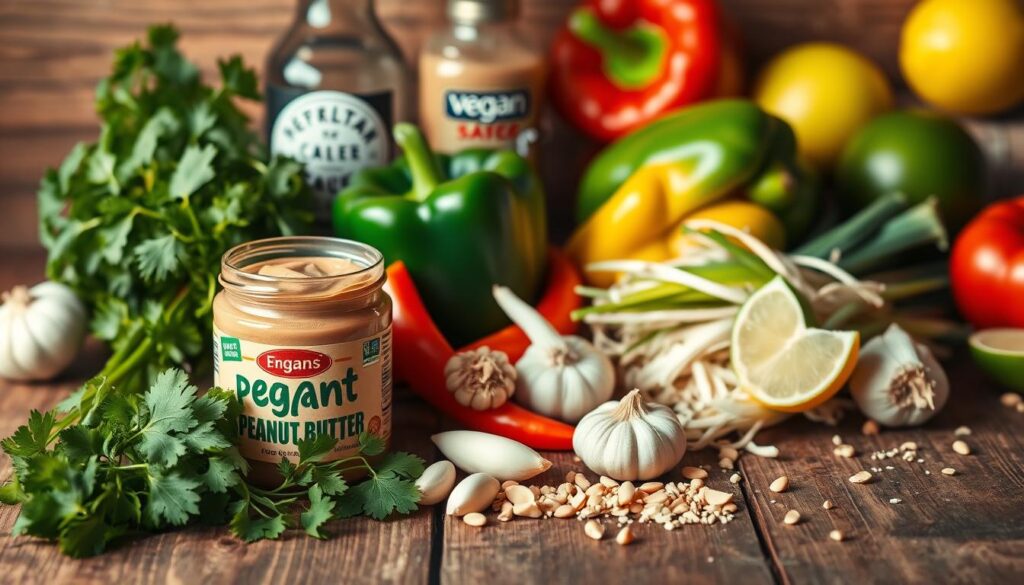
Traditional peanut sauce recipes might not fit everyone’s needs. But, you can make a gluten-free version that’s tasty for everyone.
Soy Sauce Substitutions for Dietary Restrictions
Regular soy sauce has wheat, which is bad for gluten-free diets. But, there are great alternatives:
- Tamari peanut sauce: A Japanese soy sauce that’s usually gluten-free
- Coconut aminos: A soy-free and gluten-free choice with a sweeter taste
Use the same amount as regular soy sauce for these substitutes. Coconut aminos might need a bit less to balance the sweetness.
Alternative Nut Butter Options
Don’t like peanut butter or have an allergy? Try almond butter sauce. Other nut and seed butters add different tastes:
| Butter Type | Flavor Profile | Best For |
|---|---|---|
| Almond Butter | Mild, nutty | Lighter sauces |
| Cashew Butter | Creamy, neutral | Smooth, rich sauces |
| Sunflower Seed Butter | Slightly earthy | Nut-free options |
| Tahini | Robust, tangy | Mediterranean-style sauces |
Each nut butter adds its own flavor to your sauce. Try different ones to find your favorite!
Pro tip: When substituting nut butters, start with a 1:1 ratio and adjust to taste.
Common Mistakes to Avoid When Making Peanut Sauce
Making the perfect peanut sauce can be challenging. Many home cooks face frustrating issues that stop them from making a tasty sauce. Knowing common mistakes helps you fix your recipe fast.
Fixing peanut sauce starts with recognizing the most frequent errors:
- Using conventional peanut butter instead of natural varieties
- Incorrect ingredient ratios
- Skipping taste adjustments
- Poor mixing techniques
Troubleshooting peanut sauce requires attention to several key details. The type of peanut butter is crucial. Natural peanut butter without stabilizers creates a smoother, more authentic sauce. Conventional brands often contain hydrogenated oils that make your sauce thick and gloppy.
| Mistake | Solution |
|---|---|
| Thick Consistency | Add warm water gradually |
| Bland Flavor | Adjust seasonings incrementally |
| Lumpy Texture | Whisk thoroughly or use blender |
“The secret to great peanut sauce is balance and patience.”
Temperature is key to a smooth sauce. Mix ingredients at room temperature and whisk continuously to prevent separation. Always taste and adjust seasonings before serving to ensure a perfect flavor profile.
Pairing Peanut Sauce with Proteins and Vegetables
Learn to pair peanut sauce with proteins and vegetables for a tasty meal. The right mix can make a simple dish unforgettable.
Protein Perfection with Peanut Sauce
Peanut sauce and chicken is a classic combo that always hits the spot. Grilled meat with peanut sauce adds deep flavors. Here are some protein ideas:
- Chicken: Grill, roast, or stir-fry for maximum flavor
- Peanut sauce with tofu: Crisp the tofu for a delightful texture
- Shrimp and seafood options
- Pork tenderloin or grilled pork chops
Vegetable Companions That Shine
Vegetables with peanut sauce offer a great mix of creamy and crunchy. They work well with the sauce, whether raw or cooked:
| Raw Vegetables | Cooked Vegetables |
|---|---|
| Carrots | Broccoli |
| Cucumbers | Cauliflower |
| Bell Peppers | Green Beans |
| Snap Peas | Brussels Sprouts |
Pro tip: Make sure vegetables are dry when dipping to keep the sauce right. Grilling proteins adds a smoky taste that goes great with peanut sauce.
Try different pairings to find your favorite. Peanut sauce is so versatile, you’ll find endless ways to use it in the kitchen!
Conclusion
Your journey to make the perfect homemade peanut sauce is about to change your kitchen. This easy Asian sauce is more than a condiment. It’s a game-changer for your meals, adding flavor with little effort.
A quick peanut sauce is your secret kitchen tool. It’s great for rice bowls and dipping veggies. With just a few ingredients and minutes, you can make a sauce that beats store-bought ones.
Great cooking is about trying new things and making recipes your own. Your homemade peanut sauce invites you to be creative. You can tweak flavors and ingredients to match your taste. Always have a jar ready for a tasty meal makeover.
It’s time to start making your sauce. With each batch, you’ll get better and see why homemade is best. Your kitchen will soon be filled with delicious flavors, all thanks to peanut sauce.