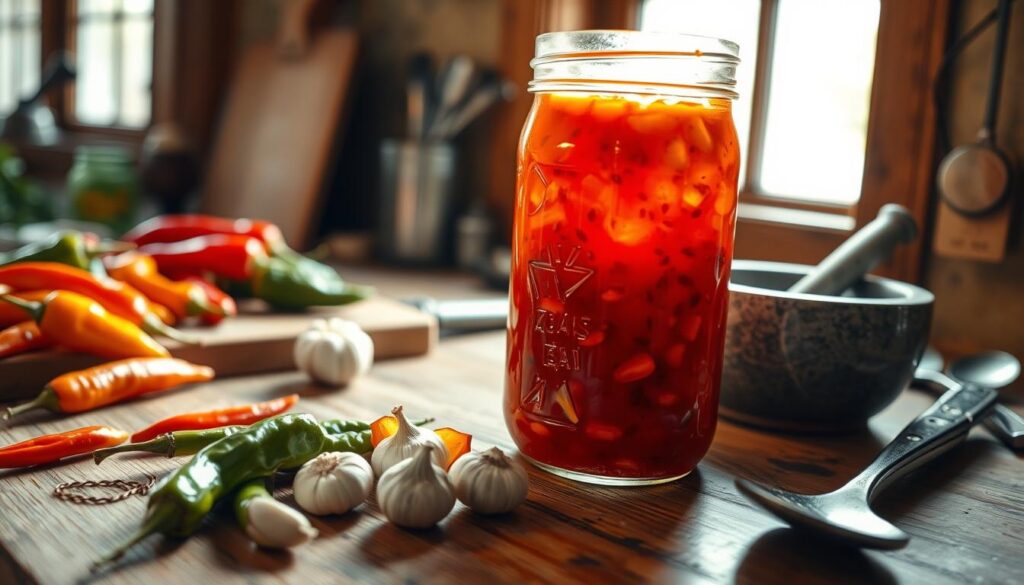
How to Make Hot Sauce The first time I burned my fingertips chopping habaneros, I knew I was hooked on creating my own hot sauce. What started as a kitchen experiment quickly became a passionate culinary adventure. It transformed my understanding of flavor and heat.
Learning how to make hot sauce at home isn’t just about creating a condiment. It’s about crafting an experience that connects you directly to the vibrant world of spices and personal creativity. Whether you’re a spice novice or a heat-seeking enthusiast, this guide will walk you through every step of creating your perfect hot sauce.
From selecting the right peppers to understanding flavor balance, you’ll discover how simple ingredients can become a transformative culinary creation. Get ready to unlock the secrets of homemade hot sauce that will elevate your meals and impress your friends.
Table of Contents
Key Takeaways
- Understand the basics of hot sauce creation
- Learn how to select the right peppers for your heat preference
- Discover essential techniques for blending and preserving
- Explore safe handling methods for chili peppers
- Develop confidence in creating custom hot sauce recipes
Why Make Your Own Hot Sauce at Home
If you’ve ever wondered how to make hot sauce, this fun kitchen adventure gives you full control over flavor and quality.. It lets you control the flavor, nutrition, and quality of your sauce.
Control Over Ingredients and Quality
Homemade hot sauce means better ingredients. You decide what goes into it. This way, you avoid the sugar, sodium, and additives found in store-bought sauces.
- Select organic peppers
- Avoid artificial preservatives
- Control sodium levels
- Use fresh, whole ingredients
Cost Savings Compared to Store-Bought Options
Making your own hot sauce saves money. Artisan hot sauces can cost $5-$8 per bottle. But, you can make your own for much less.
“Homemade hot sauce is not just about saving money, it’s about creating something uniquely yours.” – Culinary Expert
Endless Customization Possibilities
Your kitchen becomes a place for flavor experiments. Try different peppers, spice levels, and ingredients to make sauces that fit your taste.
- Adjust heat levels
- Create unique flavor profiles
- Cater to dietary restrictions
- Develop signature recipes
By making your own hot sauce, you’ll learn to appreciate cooking more. You’ll enjoy healthier, more personalized sauces.
Essential Ingredients for Homemade Hot Sauce
When you learn how to make hot sauce, the first step is picking the right ingredients.. At the core of any great hot sauce are fresh hot chile peppers. The type of pepper you choose greatly affects the sauce’s taste.
Your basic hot sauce ingredient list should include:
- 10 fresh hot chile peppers (stems removed)
- 1 onion, coarsely chopped
- 4 garlic cloves
- 1 roma tomato, roughly chopped
- ¼ cup fresh basil leaves
- ¼ cup fresh parsley leaves
Different peppers can change your sauce’s flavor a lot. Red chiles, chipotles, and habaneros make a hot and smoky sauce. Green chiles and jalapeños give a milder, citrusy taste. To add more flavor, you need more than just peppers.
Key flavor enhancers include:
- Salt (to taste)
- Lemon juice
- ½ cup vegetable oil
- 2 tablespoons beef bouillon powder
- ¼ cup pitted fresh dates (for sweetness)
Vinegar is also key in homemade hot sauce. Apple cider vinegar adds tanginess and keeps the sauce fresh. You can try different vinegars to make your sauce unique.
Fresh Peppers: Choosing the Right Varieties for Your Heat Level
Creating the perfect how to make hot sauce begins with picking the right peppers. The type of pepper you choose affects the sauce’s heat and taste. Our Hot & Smoky hot sauce base has Red Chiles, Chipotles, and Habaneros. Our Mild Citrus base has Green Chiles and Jalapenos.
Knowing about pepper varieties is key to making a hot sauce that suits your taste. Each pepper has its own heat level and flavor.
Mild Peppers for Beginners
For beginners, start with milder peppers:
- Anaheim peppers (500-2,500 Scoville Heat Units)
- Poblano peppers (1,000-1,500 Scoville Heat Units)
- Green Bell peppers (0 Scoville Heat Units)
Medium Heat Options
For a bit more heat, try these peppers:
- Jalapeño peppers (2,500-8,000 Scoville Heat Units)
- Serrano peppers (10,000-23,000 Scoville Heat Units)
- Cayenne peppers (30,000-50,000 Scoville Heat Units)
Extreme Heat Peppers for Spice Enthusiasts
If you love extreme heat, these peppers will test your limits. Warning: If you are handling very hot chilis, like Scotch bonnet or habanero peppers, wear gloves to protect your hands.
| Pepper Type | Scoville Heat Units | Flavor Profile |
|---|---|---|
| Habanero | 100,000-350,000 | Fruity, intense heat |
| Scotch Bonnet | 100,000-350,000 | Sweet, Caribbean-style heat |
| Ghost Pepper | 855,000-1,041,427 | Extremely intense, smoky |
Kitchen Tools and Equipment You’ll Need
Making homemade hot sauce is fun with the right tools. The right equipment makes cooking easier and more enjoyable. It turns how to make hot sauce making into a fun adventure.
Choosing the right tools is key for making perfect hot sauce. You’ll need essential equipment before you start.
Food Processor or Blender Requirements
A strong food processor or blender is essential. Look for ones with sharp blades and strong motors. They should handle tough peppers well.
- High-powered blender with at least 600 watts
- Food processor with sharp stainless steel blades
- Pulse function for controlled blending
Storage Bottles and Containers
After cooling, your how to make hot sauceneeds a good home. Use a funnel to fill bottles. Our Hot Sauce Kit has four 5 oz ‘Woozy Bottles’ with caps. They’re perfect for your homemade hot sauce.
| Bottle Type | Capacity | Features |
|---|---|---|
| Woozy Bottles | 5 oz | Classic design, tight-sealing caps |
| Glass Jars | 8 oz | Wide mouth, dishwasher safe |
| Squeeze Bottles | 12 oz | Easy dispensing, clear plastic |
When making hot sauce, add ingredients to your food processor with garlic. This creates a rich, flavorful base. With the right tools, you’ll make professional-quality hot sauce quickly!
How to Make Hot Sauce from Fresh Peppers
Making a tasty, easy 5-minute homemade hot sauce is simple. You only need 5 ingredients. This recipe turns any peppers into a zesty condiment without hard cooking steps.
Start by picking fresh peppers. The key is choosing peppers that match your desired heat level. You can make a sauce that’s just right for you, whether you like mild jalapeños or hot habaneros.
- Gather fresh peppers of your choice
- Prep basic ingredients like vinegar and salt
- Use a blender or food processor
- Mix and store in clean containers
Raw hot sauce keeps more of the pepper’s flavor than cooked methods. You avoid boiling and fermentation. This means your sauce is brighter, more vibrant, and hotter with fewer peppers.
Your homemade how to make hot sauce is ready in just 5 minutes. You get to control the ingredients and how spicy it is. No need for store-bought hot sauce when you can make your own!
Preparing Your Peppers and Aromatics
Making the perfect hot sauce starts with preparing your ingredients well. Choosing and handling peppers needs care and safety steps. This ensures your sauce is tasty and safe to eat.
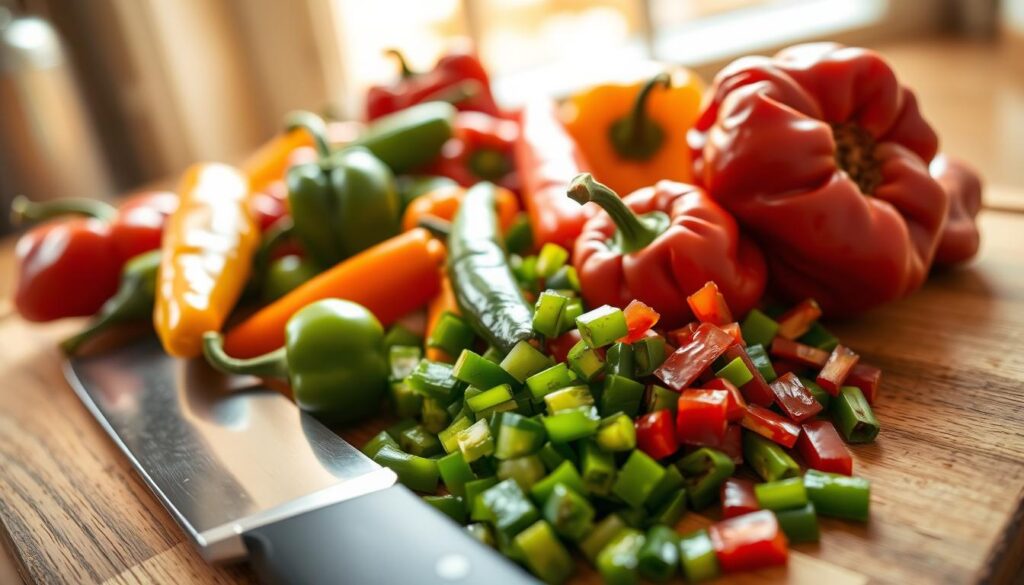
When working with hot chilis, safety is crucial. Always wear kitchen gloves with peppers like Scotch bonnet or habanero. These can irritate your skin and cause burns if touched.
Safe Handling Tips for Hot Chilis
- Wear protective rubber or latex gloves during pepper preparation
- Avoid touching your face or eyes while handling hot peppers
- Wash hands thoroughly with soap after handling hot chilis
- Use kitchen tools to minimize direct contact with pepper surfaces
Removing Stems and Preparing Garlic
Chop the tops off of the peppers, and toss them into your food processor along with the garlic. For best results, use 10 fresh hot chile peppers with stems removed. Peeling garlic cloves beforehand ensures smoother blending and more consistent flavor distribution.
- Remove pepper stems carefully
- Peel garlic cloves
- Chop peppers into smaller pieces
- Prepare food processor for blending
Pro tip: Keep a separate cutting board for hot peppers to prevent cross-contamination with other ingredients.
Blending Your Hot Sauce to Perfection
“How to Make Hot Sauce” the perfect hot sauce needs a careful blending technique. Pour the cooled mix into a food processor or blender. This turns your ingredients into a smooth, tasty sauce. The blending step is key for the right mix of taste and texture.
Here are the important steps for blending your hot sauce:
- Add just enough vinegar to cover the ingredients ½ to ⅔ of the way
- Purée for 2-3 minutes until smooth and well combined
- Stop occasionally to scrape down the sides of the blender
- Check for consistent texture and color
Your blending method greatly affects the sauce’s quality. Patience is key – don’t rush it. This can lead to uneven textures. how to make hot sauce experts suggest using a high-powered blender for the smoothest results.
“The secret to great hot sauce is in the blend – smooth, consistent, and full of flavor.”
| Blending Time | Expected Texture | Recommended Equipment |
|---|---|---|
| 2-3 minutes | Smooth, uniform | High-powered blender |
| 1-2 minutes | Slightly chunky | Standard food processor |
| 30-60 seconds | Rustic, textured | Immersion blender |
Don’t forget to taste and adjust your how to make hot sauce after blending. A perfect blend highlights the flavors of your chosen peppers and ingredients.
Adjusting Flavor with Vinegar, Salt, and Sweeteners
Making the perfect how to make hot sauce is all about balance and precision. Vinegar is key for that tangy kick that makes hot sauces so appealing. It’s as important as peppers in creating a saucy and hot flavor.
Selecting Your Vinegar Flavor Profile
Different vinegars can change your hot sauce’s taste a lot. Here are some popular ones:
- Distilled White Vinegar: Sharp and clean, great for Hot & Smoky Sauce
- Apple Cider Vinegar: Mild Citrus sauce favorite with a fruity note
- Red Wine Vinegar: Adds depth and complexity
- Rice Vinegar: Delicate and slightly sweet
Make sure your vinegar has at least 5% acidity. This keeps your sauce fresh and tangy.
Balancing Heat with Sweetness and Salt
The secret to a great hot sauce is balancing flavors. Use salt to boost the taste. A bit of sugar can soften the heat and round out the flavor.
| Ingredient | Purpose | Recommended Amount |
|---|---|---|
| Vinegar | Adds Tanginess | 1/4 to 1/2 cup per batch |
| Salt | Enhances Flavor | 1-2 teaspoons |
| Sugar/Honey | Balances Heat | 1-3 teaspoons |
Pro tip: Taste and adjust your ingredients slowly. Add lemon juice for extra brightness. Blend between each addition for perfect balance.
Cooking Versus Raw Hot Sauce Methods
There are two main ways to make hot sauce: cooking and raw preparation. Each method changes the flavor, heat, and taste of your homemade sauce.
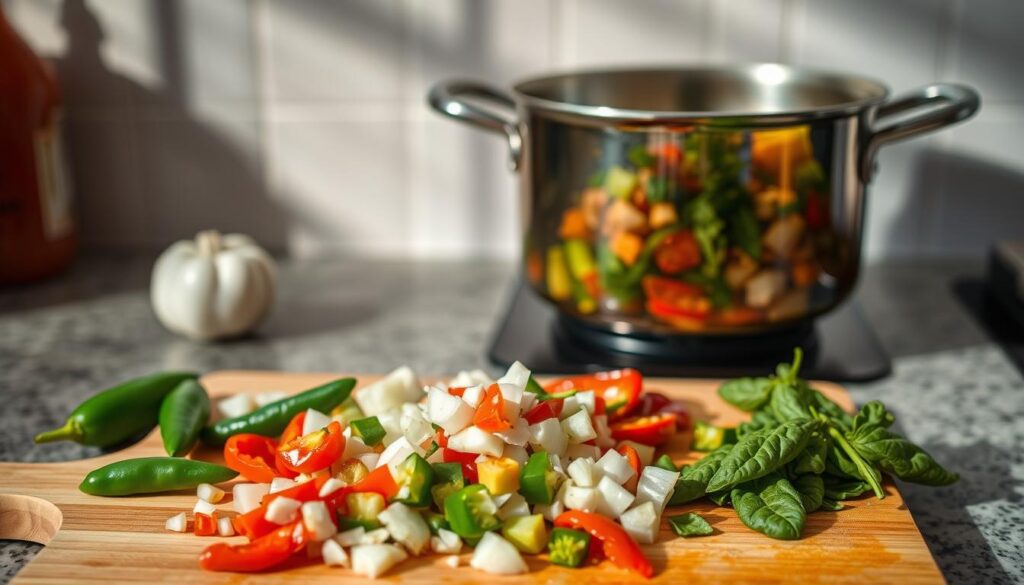
When you boil the pepper mixture in a saucepan, you open up new flavors. Cooking peppers makes the sauce more complex and less spicy. The steps are:
- Bringing mixture to a boil on medium-high heat
- Simmering for 15 minutes
- Reducing heat and adding lemon juice
- Allowing the mixture to cool slightly
Raw hot sauce is another option. This method keeps the pepper heat and freshness at its best. It’s great for using a few peppers and keeping their intense flavor.
| Cooking Method | Raw Method |
|---|---|
| Reduced heat intensity | Maximum heat preservation |
| Complex flavor development | Fresh, bright pepper taste |
| Longer preparation time | Quick and simple process |
Your choice depends on what you like and what you want your hot sauce to be like. Try both methods to find your favorite hot sauce!
Creative Variations and Flavor Combinations
Making your own hot pepper sauce is a fun journey. You can add a spicy kick to your dishes or try new flavors. These ideas will make your homemade sauce a gourmet treat.
Exploring different how to make hot sauce styles can boost your cooking. Each style adds its own unique taste. This lets you mix flavors in exciting ways.
Nashville Hot Sauce Style
The Nashville hot sauce is known for its bold taste and heat. To make it, focus on:
- Cayenne pepper base
- Paprika for deep color
- Brown sugar for a hint of sweetness
- Cayenne oil coating for more heat
Hot Honey Sauce Variations
Hot honey sauce combines sweetness and heat. Making your own is easy. Here’s how:
- Start with a 3:1 honey to hot sauce mix
- Infuse honey with sliced peppers
- Blend hot peppers into the honey
| Pepper Type | Heat Level | Flavor Profile |
|---|---|---|
| Habanero | High | Fruity, intense |
| Jalapeño | Medium | Grassy, bright |
| Scotch Bonnet | Very High | Sweet, Caribbean-style |
Citrus-Infused Hot Sauces
Citrus adds a zesty touch to how to make hot sauce. Our Mild Citrus sauce uses lime juice. But you can try other citrus for a unique taste. Think lemon, orange, yuzu, pineapple, or grapefruit!
Try adding different citrus to make your hot sauce bright and refreshing. Swap some vinegar with citrus for a fresh twist. This will make your homemade sauce stand out.
Storing and Preserving Your Homemade Hot Sauce
Making your own hot sauce is a fun journey. After you’ve mixed up your spicy concoction, it’s important to store it right. This keeps the flavor strong and the sauce fresh for longer.
Let your pepper mix cool down before putting it in a jar. Pick a clean glass jar with a tight lid to keep the sauce’s taste and color bright. The fridge is the best place to keep your homemade how to make hot sauce.
- Cool the sauce at room temperature
- Use clean glass containers with secure lids
- Refrigerate immediately after preparing
Your how to make hot sauce will last longer in the fridge if it’s covered in oil. Keep the sauce in the fridge for at least 24 hours. This lets the flavors grow and get better. Pro tip: Homemade hot sauce stays at its best for about 6 months if stored correctly.
How long you can keep your hot sauce depends on your recipe:
- Fresh pepper-based sauces: 2-3 weeks
- Vinegar-based hot sauces: Up to 6 months
- Fermented hot sauces: Potentially longer preservation
Always check for spoilage before using. Look for off smells, mold, or color changes. If it doesn’t smell right or look right, it’s best to throw it away.
Conclusion
- Making how to make hot sauce at home opens up a world of culinary creativity and flavor exploration. You can craft unique sauces that reflect your personal taste preferences. The skills you’ve learned will empower you to experiment with different ingredients and heat levels.Now that you’ve learned how to make hot sauce, you can try new peppers and flavors to create your own signature version.
Your homemade how to make hot sauce adventure doesn’t stop with one recipe. Each batch represents an opportunity to refine your technique and develop signature flavors. From mild jalapeño blends to scorching habanero concoctions, you now have the knowledge to transform fresh peppers into delicious condiments that can elevate any meal.
Remember that practice makes perfect. Start with simpler recipes and gradually build your confidence. Safety, careful ingredient selection, and proper storage are key to creating outstanding hot sauces. With patience and creativity, you’ll soon be impressing friends and family with your artisan condiments that far surpass store-bought alternatives.
Whether you’re a spice enthusiast or a culinary hobbyist, how to make hot sauce making offers an exciting and rewarding experience. Your kitchen is now a laboratory for flavor innovation, ready to transform fresh peppers into liquid gold that adds excitement to every dish.