Ever wanted that special sauce to make your meals taste like they’re from a restaurant? Thai peanut sauce is your secret ingredient. I found it in a cooking class years ago. It totally changed my home cooking.
Making real Thai peanut sauce is easy. You don’t need to be a pro or find rare ingredients. You can make it with things you likely have at home. It’s a simple recipe for a sauce that tastes like it’s from a restaurant.
Imagine making a creamy sauce in just five minutes. It’s full of sweet, savory, spicy, and tangy flavors. This sauce is great for many dishes. You can use it for dipping or on noodle bowls. It opens up a world of flavors in your kitchen.
Table of Contents
Key Takeaways
- Create authentic Thai peanut sauce in minutes
- Use simple pantry ingredients
- Perfect for multiple dishes and cuisines
- No special cooking skills required
- Customize flavor to your taste preferences
Why You’ll Love This Thai Peanut Sauce Recipe
Discovering the perfect homemade Thai peanut sauce can change your cooking. This recipe makes your meals special and memorable.
Get ready to fall in love with a sauce that brings restaurant-quality flavor to your kitchen. The magic of this recipe is its versatility and simple preparation.
The Perfect Balance of Sweet, Savory, and Spicy
Your taste buds will dance with excitement with this sauce‘s flavor. The mix of sweet, savory, and spicy is perfect:
- Sweet undertones from honey or brown sugar
- Rich umami from soy sauce
- Spicy kick from chili sauce or red pepper flakes
- Creamy texture from smooth peanut butter
Made with Simple Pantry Staples
No need for exotic ingredients or special shopping trips. You can make this sauce with common kitchen items:
| Ingredient | Typical Pantry Availability |
|---|---|
| Peanut Butter | High |
| Soy Sauce | High |
| Honey | Medium |
| Rice Vinegar | Medium |
Ready in Just Five Minutes
Time is precious, and this recipe respects that. With just five minutes of prep, you’ll have a top-notch sauce. It’s quick, easy, and delicious!
Essential Ingredients for Authentic Thai Peanut Sauce
To make a real Thai peanut sauce, you need the right mix of sweet, savory, and spicy. Start with ½ cup creamy peanut butter. It gives your sauce a smooth base.
For a sauce that tastes amazing, you’ll need these key ingredients:
- ½ cup creamy peanut butter
- 2 tablespoons low sodium soy sauce
- 1.5 tablespoons brown sugar
- 1 tablespoon rice vinegar
- ½ teaspoon fresh ginger
- 2 garlic cloves, minced
- 1 tablespoon lime juice
- ¼ teaspoon red pepper flakes
- ¼ cup water or coconut milk
Mixing these ingredients creates magic. Fresh garlic and ginger add depth. Soy sauce adds umami, while brown sugar brings sweetness.
Choose natural peanut butter for the best taste. Adjust the red pepper flakes for your desired heat level.
Authenticity is about balance – each ingredient plays a crucial role in creating the perfect Thai peanut sauce.
Use fresh garlic and ginger for the best flavor. They make your sauce vibrant and restaurant-quality, taking your cooking to the next level.
What Makes This Thai Peanut Sauce Different
This Thai peanut sauce is special. It’s not just any sauce. It makes your cooking better, turning it into something amazing in just minutes.
Smooth and Drizzle-able Consistency
This sauce is smooth and easy to drizzle. It’s not thick or gloopy. The secret is in the right mix of liquids.
It coats your food well without being clumpy. You’ll love how it flows over your dishes.
- Thin enough to drizzle
- Smooth texture
- No lumps or clumps
Fresh Garlic and Ginger for Bold Flavor
This sauce uses fresh garlic and ginger. But what really makes it stand out is the sesame oil. It adds a rich flavor.
Grating the ginger and garlic finely makes the sauce even better. It’s super smooth and flavorful.
| Ingredient | Flavor Impact | Preparation Tip |
|---|---|---|
| Fresh Garlic | Intense Aroma | Grate finely |
| Fresh Ginger | Spicy Warmth | Microplane recommended |
| Sesame Oil | Rich Depth | Use sparingly |
With fresh ingredients and the right technique, you’ll make a sauce that’s far better than store-bought. It’s all about the smooth texture, bold flavors, and perfect drizzle.
Step-by-Step Instructions for Perfect Peanut Sauce
Making the perfect Thai peanut sauce is simple. Just a few steps can turn basic ingredients into a tasty sauce. This sauce will make any dish better.
You can make your peanut sauce two ways: whisking or blending. Both methods are easy and give great results.
Whisking Method
Here’s how to whisk your sauce:
- Start with a medium bowl
- Mix peanut butter, soy sauce, brown sugar, and rice vinegar
- Add grated ginger, minced garlic, lime juice, and red pepper flakes
- Whisk until everything is smooth
- Add water or coconut milk slowly, whisking between each tablespoon
- Keep whisking until the sauce is the right thickness
Blender Method
The blender method is quick:
- Put all ingredients in a food processor or blender
- Blend for about 30 seconds
- Stop and scrape the sides if it’s not smooth
- Blend until it’s creamy and smooth
Tip: Let the sauce sit for 30 minutes. This lets the flavors mix well. Taste and adjust the seasoning as you like. Add more lime juice, soy sauce, or hot sauce if needed.
Remember, homemade Thai peanut sauce is all about personal preference. Don’t be afraid to experiment and make it your own!
Tips for the Best Homemade Peanut Sauce
Making the perfect Thai peanut sauce needs some skill. It’s all about knowing how ingredients work together and balancing flavors. Follow these expert tips to make your sauce truly delicious.
Mastering Peanut Butter Texture
The temperature of peanut butter is key for mixing. Let it warm up to room temperature or gently heat it. This makes it easier to whisk and gives a smooth texture. Cold peanut butter can make the sauce lumpy and uneven.
- Remove peanut butter from refrigerator 30 minutes before preparing
- Gently microwave for 10-15 seconds if needed
- Stir thoroughly to create a uniform texture
Flavor Adjustment Techniques
If you’re using sweetened peanut butter like JIF, taste it first. You might not need to add any sweetener. The trick is to season slowly and taste often.
If the sauce isn’t smooth, add a little liquid and whisk until it’s right. Always taste as you go. For more tang, add vinegar. For sweetness or spice, add maple syrup or Sriracha.
| Flavor Adjustment | Recommended Addition |
|---|---|
| More Tanginess | Rice vinegar or lime juice |
| More Sweetness | Maple syrup or honey |
| More Heat | Sriracha or red pepper flakes |
Peanut sauce gets thicker in the fridge. To serve, let it sit out for 30 minutes or microwave in 15-second bursts. Remember, cooking is an art, not just science!
Thai Peanut Sauce Variations You Can Try
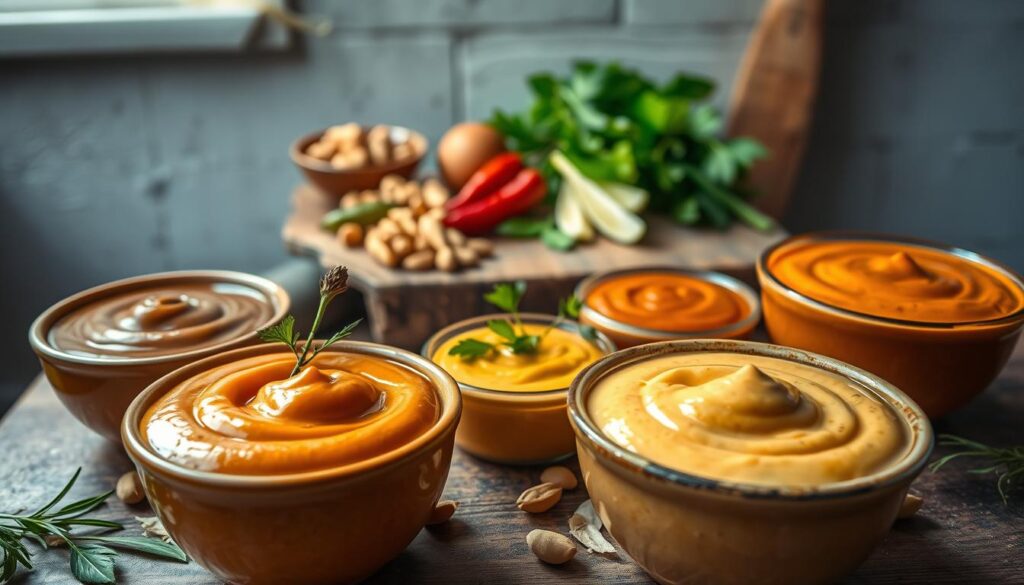
Exploring different Thai peanut sauce variations can change your cooking game. This sauce is great because it can fit your taste and dietary needs.
Here are some fun ways to make your Thai peanut sauce your own:
- Spicy Version: Use 1 teaspoon of fish sauce for a salty, umami flavor. Add extra sriracha or a pinch of Thai chili powder to increase the heat level to your liking.
- Creamy Twist: Replace water with canned coconut milk for a richer, more luxurious texture. Add more coconut milk to adjust the consistency as needed.
- Tangy Alternative: Squeeze fresh lime juice into the sauce for an authentic Thai flavor profile.
Adding sweeteners can also enhance your sauce. Instead of brown sugar, try:
- Honey
- Maple syrup
- Coconut sugar
For an extra layer of complexity, add 2 tablespoons of toasted or dark sesame oil. This ingredient can make the sauce taste nutty and rich, adding depth to the peanut butter base.
Every variation adds something special to the sauce. You can experiment and find the perfect mix for you. Feel free to mix and match ingredients to create a sauce that’s just right for you.
Creative Ways to Use Your Peanut Sauce
Your homemade Thai peanut sauce is more than just a condiment. It’s a flavor-packed superstar that can turn simple meals into amazing dishes. Just a drizzle or dip can make a big difference.
Perfect Pairings for Noodles and Salads
Want to make your meal prep better? This sauce is great for noodle bowls, salads, and grain dishes. Try these tasty combos:
- Spicy Sesame Zoodles
- Quinoa Crunch Salad
- Thai Peanut Zoodles
- Buddha Bowls with mixed vegetables
A Stellar Dipping Sauce
Your Thai peanut sauce is perfect for dipping fresh spring rolls. Its creamy texture is perfect with:
- Crispy Tofu
- Summer Rolls
- Satay skewers
- Fresh vegetable crudités
Drizzling and Cooking Techniques
Be creative with this sauce. Use it for noodle bowls, grilled veggies, or as a salad dressing. Try adding chicken or tofu to a skillet with the sauce. It becomes browned and crispy, looking beautiful.
Pro tip: The sauce transforms ordinary proteins into restaurant-quality dishes with minimal effort!
From Firecracker Vegan Lettuce Wraps to protein-packed meals, this Thai peanut sauce is your secret kitchen weapon.
Common Ingredient Substitutions
Cooking Thai peanut sauce at home lets you swap ingredients easily. You don’t need to worry if you’re missing something. Most pantry items can be swapped without losing flavor.
- You can swap brown sugar with honey, maple syrup, or coconut sugar for sweetness
- If you can’t find rice vinegar, apple cider vinegar or white wine vinegar can be used instead
- Ground ginger is a good substitute, but it won’t be as fresh or bold as fresh ginger
- For when fresh garlic is not available, garlic powder can be used, but it’s less flavorful
For those with dietary needs, there are easy swaps:
- Vegan version: No special adaptations needed
- Gluten-free option: Use tamari or coconut aminos instead of soy sauce
- Peanut butter alternative: Almond butter is a great substitute and adds a delicious twist
| Original Ingredient | Potential Substitute | Flavor Impact |
|---|---|---|
| Brown Sugar | Honey | Similar sweetness, slight flavor variation |
| Rice Vinegar | Apple Cider Vinegar | Comparable acidity, mild taste difference |
| Fresh Ginger | Ground Ginger | Less intense, more muted flavor |
Remember, swapping ingredients might change your sauce’s taste a bit. Try different combinations to find what you like best!
How to Store Your Homemade Thai Peanut Sauce
Keeping your homemade Thai peanut sauce fresh is key. The right storage methods ensure you can enjoy its taste for days or even months.
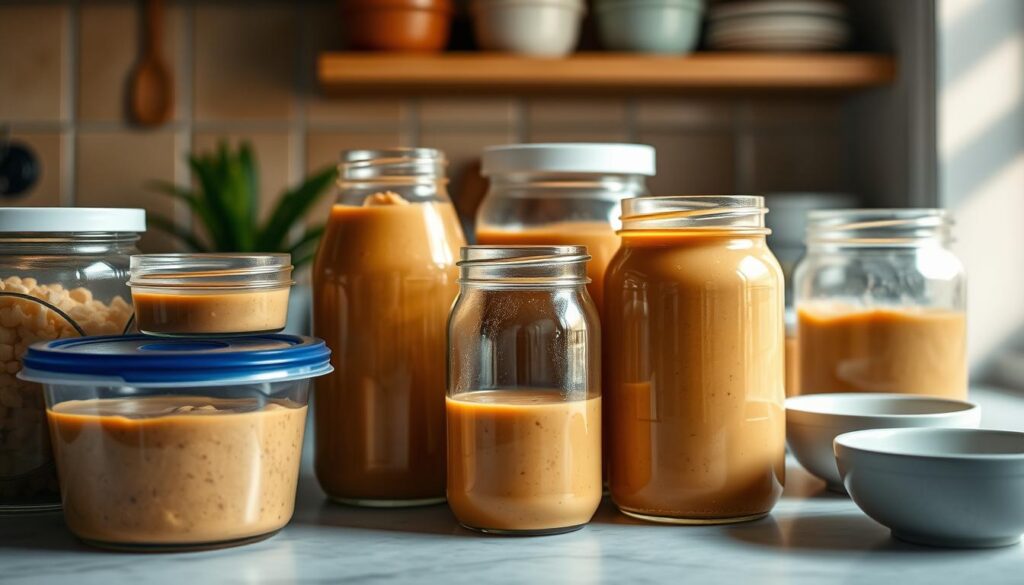
Refrigerator Storage Recommendations
Storing your Thai peanut sauce in the fridge is easy. Just follow these steps for the best results:
- Use an airtight container or glass jar
- Store in the refrigerator for up to one week
- Stir well before each use, as ingredients may separate naturally
Freezing for Extended Preservation
Freezing is great for keeping your peanut sauce fresh longer. It helps maintain its rich flavor and smooth texture.
- Transfer sauce to a freezer-safe container
- Freeze for up to three months
- Thaw in the refrigerator overnight
- Whisk thoroughly to restore original consistency
Pro tip: Freezing in smaller portions is smart. It lets you thaw only what you need for each meal.
Troubleshooting Your Peanut Sauce
Making the perfect Thai peanut sauce can be tricky. Don’t worry if it doesn’t turn out right the first time. We have expert tips to help you fix common problems.
Texture and Consistency Problems
If your peanut sauce isn’t smooth, add a little liquid and whisk until it’s right. Be patient and make small changes. Start with a little water or coconut milk to mix the ingredients well.
- Whisk continuously to prevent clumping
- Add liquid incrementally
- Use warm liquid for easier mixing
Dealing with Refrigerated Sauce
Peanut sauce gets thicker in the fridge. To fix it, let it sit at room temperature for 30 minutes or microwave in 15-second bursts. This warming helps it stay smooth without losing flavor.
Sweetness Considerations
If you use sweetened peanut butter like JIF, taste it first. You might not need to add more sugar. Different brands have different amounts of sugar, so always taste before adjusting.
- Check peanut butter sweetness
- Taste before adding extra sugar
- Adjust seasonings gradually
Pro tip: A whisk is your best friend when troubleshooting peanut sauce. Consistent whisking helps create a smooth, creamy texture every time.
Nutritional Information and Dietary Adaptations
Explore the nutritional details of this tasty Thai peanut sauce. It’s not just delicious but also good for you. Each serving has Calories: 146kcal, making it a great choice for your meals.
- Carbohydrates: 9g
- Protein: 6g
- Fat: 11g (including 2g Saturated Fat, 3g Polyunsaturated Fat, and 5g Monounsaturated Fat)
Vegan and Gluten-Free Adaptations
Good news for those with special diets! This Thai peanut sauce is very flexible and can fit into many dietary needs.
- Vegan Option: No changes needed – it’s already vegan-friendly!
- Gluten-Free Option: Just use tamari or coconut aminos instead of soy sauce
It also has small amounts of important nutrients:
- Sodium: 430mg
- Potassium: 147mg
- Fiber: 1g
- Vitamin A: 26IU
- Calcium: 17mg
“A sauce that’s not just delicious, but nutritionally balanced too!” – Home Cooking Enthusiast
This sauce has only 5g of sugar and 1mg of iron. It shows that you can have great taste without sacrificing nutrition.
Conclusion
Now you know how to make Thai peanut sauce. It’s quick, taking just five minutes, and uses common ingredients. This sauce adds a special touch to any meal, making it taste like it came from a restaurant.
This sauce is a game-changer in the kitchen. You can use it on noodle bowls, as a dip for spring rolls, or in salad dressings. Its flexibility lets you get creative and tailor it to your taste.
Homemade peanut sauce is far better than store-bought. It’s fresher, tastes better, and doesn’t have bad additives. Keep some in the fridge to make any meal special. Your cooking journey is just starting – try out more Asian recipes and enjoy making your own flavors.
We’re excited to hear about your peanut sauce recipes. Share how you use it and inspire others to cook like a pro!