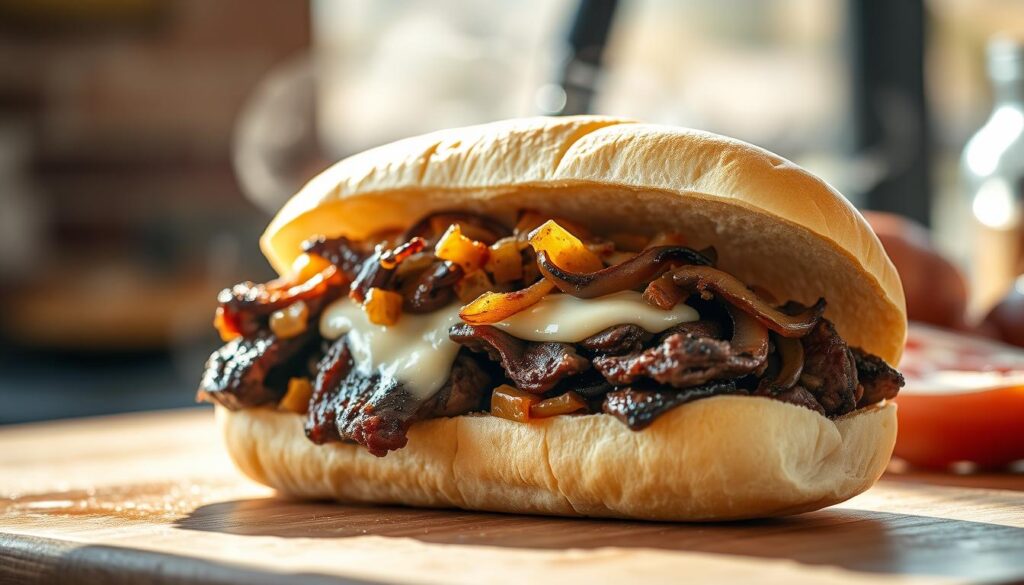
How to Make the Perfect Philly Cheesesteak Recipe at Home great culinary journey starts with a passion for flavor and tradition. The Philly cheesesteak is more than a sandwich. It’s a cultural icon that connects us to Philadelphia’s vibrant streets and generations of home cooks.
Imagine making a restaurant-quality cheesesteak in your own kitchen. Choosing the right cut of beef is your first step. With the right technique and ingredients, you’ll turn simple parts into a delicious meal that captures Philadelphia’s famous street food essence.
Your journey to making authentic cheesesteaks starts here. Whether it’s for a casual family dinner or game day, this guide will help you. You’ll learn how to choose cheese, make homemade cheese sauce, and caramelize onions. You’ll impress even the most discerning food lovers.
Table of Contents
Introduction to the Philly Cheesesteak recipe
The Philly cheesesteak recipe more than a sandwich. It’s a symbol of Philadelphia’s street food culture. It’s made with simple yet powerful ingredients that make it unforgettable.
A Brief History of the Philly Cheesesteak
In the 1930s, Pat and Harry Olivieri, hot dog vendors in South Philadelphia, tried something new. They grilled thinly sliced ribeye steak on a grill. This creation quickly won over local taxi drivers and became a hit.
- Created in Philadelphia in the 1930s
- Invented by Pat and Harry Olivieri
- Initially sold from a hot dog stand
- Quickly became a local favorite
Key Ingredients of a Classic Philadelphia Cheesesteak
A true Philly cheesesteak recipe has four key parts: thinly sliced ribeye steak, melted cheese, caramelized onions, and a soft hoagie roll. This mix is what makes the sandwich so appealing. Each part is important, and quality is key.
| Ingredient | Importance | Characteristic |
|---|---|---|
| Ribeye Steak | Primary Protein | Thinly sliced, tender |
| Cheese | Flavor Enhancer | Provolone or Cheez Whiz |
| Onions | Aromatic Element | Caramelized |
| Hoagie Roll | Foundation | Soft, fresh |
While other places add bell peppers and mushrooms, true Philly cheesesteak recipe stick to steak, onions, and cheese. Knowing these basics helps you make your own version at home.
Selecting the Right Meat
Making a real Philly cheesesteak recipe begins with picking the right beef. The meat you choose can make or break this classic sandwich. Knowing your options is key to getting that true Philadelphia taste.
- Ribeye: Premium choice with rich marbling
- Top sirloin: Lean yet flavorful option
- Shoulder cut: Budget-friendly alternative
Best Beef Cuts for Cheesesteaks
Experts say ribeye is the best for its tenderness and flavor. When picking your beef, look for cuts with good marbling. This will make your sandwich juicy and tasty.
“The secret to a great cheesesteak is in the quality of the meat” – Philadelphia Culinary Institute
Slicing Techniques for Tender Meat
Getting the right slice is key for a tender cheesesteak. Here’s how to do it:
- Partially freeze meat for easier cutting
- Use a sharp knife for thin, consistent slices
- Cut against the grain for maximum tenderness
| Beef Cut | Tenderness | Price Range |
|---|---|---|
| Ribeye | High | $$$$ |
| Top Sirloin | Medium | $$ |
| Shoulder | Low | $ |
Choosing the right meat makes a big difference. Try different cuts to find your favorite cheesesteak.
Essential Cheeses for the Perfect Melt
Choosing the right cheese is key to a great Philly cheesesteak recipe. Cheese isn’t just a topping; it’s a vital part that shapes the sandwich’s taste and feel.
The cheese you pick can turn a simple sandwich into a masterpiece. Both pros and home cooks know that cheese makes the melt that draws people in.
Popular Cheese Options
- Cheez Whiz: The most traditional Philadelphia choice
- Provolone: Offers a smooth, mild flavor
- American cheese: Provides a classic, creamy melt
- White American: A slightly sharper alternative
Flavor Profiles of Different Cheeses
Every cheese adds its own special touch to your cheesesteak. Cheez Whiz gives a tangy, sauce-like feel. Provolone has a more complex, sharp taste. American cheese melts into a creamy layer that wraps around the meat.
Pro tip: Mix two cheeses for the best taste. Cheez Whiz and provolone together make your cheesesteak unforgettable.
“The right cheese turns a good sandwich into a great memory.” – Philadelphia Cheesesteak Tradition
The Importance of the Bread
The bread is the unsung hero of any authentic Philly cheesesteak recipe. Choosing the right roll is key to a great sandwich. A perfect cheesesteak starts with a roll that complements the meat and cheese.
Selecting Authentic Hoagie Rolls
When making your perfect cheesesteak, picking the right roll is essential. Philadelphia bakeries have mastered the art of making the ideal hoagie roll. It’s soft yet sturdy to hold your filling.
- Look for fresh rolls with a crisp exterior
- Seek out rolls with a slightly chewy texture
- Avoid overly crusty or too soft bread
Ensuring Maximum Freshness and Texture
Your bread should be soft but strong. A quality hoagie roll will soak up juices without getting soggy. This makes every bite delicious.
Pro tip: Lightly toast the inside of your roll to create a moisture barrier that keeps your cheesesteak ingredients perfectly contained.
Local Philadelphia bakeries like Amoroso’s are the gold standard for authentic cheesesteak rolls. If you can’t find these, look for similar Italian-style long rolls. They should have a soft inside and a slightly crisp crust.
- Warm the roll before assembling
- Don’t overload with ingredients
- Serve immediately for best texture
Preparing the Vegetables
Vegetables are key to making your Philly cheesesteak recipe amazing. The right prep can add depth, texture, and flavor to every bite.
Onions: The Classic Flavor Enhancer
Onions are the heart of a real Philly cheesesteak recipe. Choose sweet onions like Vidalia or yellow ones for the best caramelization. Here’s how to prepare them:
- Slice onions thinly for even cooking
- Cook on medium-high heat until golden brown
- Stir frequently to prevent burning
Exploring Additional Vegetable Options
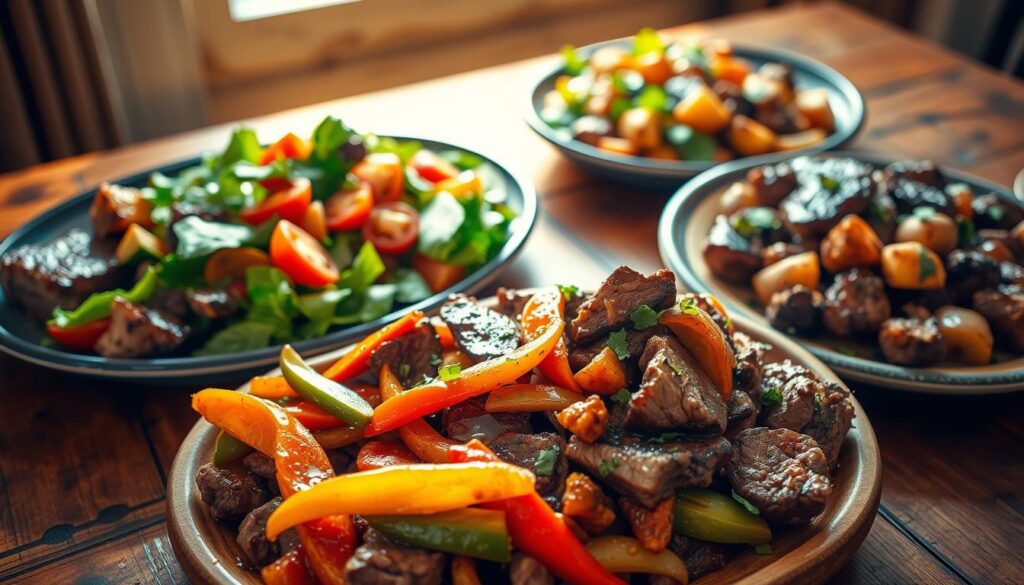
While onions are classic, you can also try other veggies. Bell peppers and mushrooms bring new flavors:
- Bell Peppers: Add color and slight sweetness
- Mushrooms: Provide earthy undertones
- Slice vegetables uniformly for consistent cooking
Pro tip: Sauté vegetables separately to control individual cooking times and maintain distinct flavors.
Cooking Method: Griddle vs. Skillet
Choosing the right cooking surface is key to a great Philly cheesesteak recipe Both griddles and skillets have their fans among chefs and home cooks. They debate which one is better for making this classic sandwich.
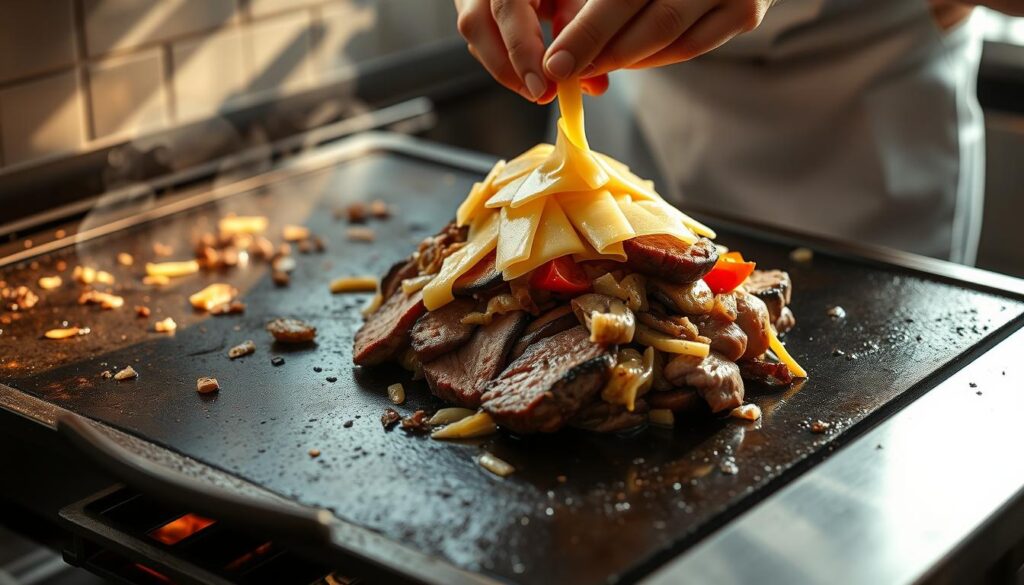
Your choice of cooking surface affects the taste, texture, and quality of your cheesesteak. Let’s look at the main differences between griddles and skillets. This will help you make the perfect meal.
Griddle Advantages and Techniques
- Provides maximum surface area for even meat cooking
- Allows simultaneous preparation of multiple ingredients
- Creates consistent heat distribution
- Ideal for caramelizing onions and peppers
Skillet Cooking Considerations
- Offers better control for smaller batch cooking
- Works well in home kitchens with limited space
- Helps develop deep flavor through direct contact
- Requires more attentive heat management
Pro Tips for Even Cooking
- Slice meat against the grain for tenderness
- Use high heat for quick searing
- Keep ingredients moving to prevent burning
- Drain excess fat for crisp meat texture
Whether you pick a griddle or skillet, mastering temperature control is crucial. It’s the secret to an authentic Philly cheesesteak that will wow your friends and family.
Creating the Perfect Assembly Line
Making a perfect Philly cheesesteak is an art that needs precision and skill. The way you put it together can make a big difference. It turns good ingredients into a truly great meal. By following the assembly line method, every bite will be full of flavor and texture.
Organizing Your Ingredients
Getting ready is important when making cheesesteaks. Before you start cooking, gather and organize all your ingredients. Your mise en place should include:
- Thinly sliced beef
- Diced onions
- Hoagie rolls
- Cheese slices
- Butter for rolls
- Mayonnaise
- Salt and pepper
Timing for the Best Results
Buttering and preparing hoagie rolls is all about timing. Start by toasting your rolls on a griddle until they’re golden brown. Then, remove them and set them aside. Next, dice onion and thinly slice beef for quick cooking.
Sauté onions and remove them from the pan. Then sauté beef until it’s cooked through, seasoning with salt and pepper. Add back the onions to mix the flavors. Divide the mixture into 4 portions, topping each with 2 slices of cheese.
The professional technique is to work with one portion at a time. Place a toasted bun over each portion and use a spatula to scrape the cheesy beef into your bun as you flip it over. Spread a thin layer of mayo on the toasted side of each roll before assembly for an extra layer of richness.
Pro tip: Keep your movements quick and confident to maintain the heat and prevent the meat from cooling down.
Customizing Your Philly Cheesesteak
A classic Philly cheesesteak recipe is tasty, but adding your own twist makes it even better. You can turn a simple sandwich into a masterpiece with creative toppings and new ideas.
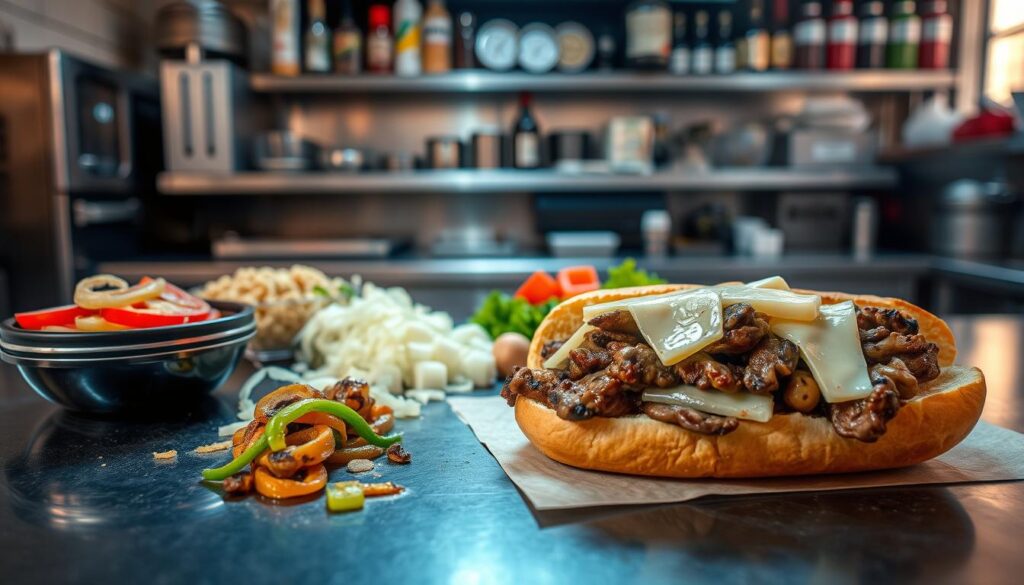
Make your cheesesteak experience unforgettable with these tasty additions:
- Spicy jalapeños for heat lovers
- Crispy bacon bits for extra crunch
- Roasted garlic spread for depth
- Hot sauce for kick
- Pickled vegetables for tanginess
Popular Toppings and Add-Ons
Philly cheesesteak recipe are all about trying new things. Some favorite extras include:
- Marinara sauce
- Fresh basil leaves
- Crispy fried onions
- Roasted red peppers
- Sliced cherry peppers
Vegetarian and Vegan Alternatives
For those who love plant-based foods, there are great cheesesteak options. Try using:
- Portobello mushrooms
- Seitan strips
- Jackfruit
- Impossible meat
- Grilled tofu
Swap traditional cheese for vegan options like cashew cheese or nutritional yeast. This keeps the creamy texture without using dairy.
Serving Suggestions
A perfect Philly cheesesteak recipe needs great sides and drinks to make it even better. The right choices can take your meal from good to amazing.
There’s more to your cheesesteak journey than just the sandwich. The right sides and drinks can make your meal unforgettable.
Classic Sides to Elevate Your Cheesesteak
- Crispy French fries with seasoned salt
- Crunchy onion rings
- Creamy coleslaw
- Potato chips
- Pickle spears
Drink Pairings That Enhance the Experience
Choosing the right drink can balance the flavors of your cheesesteak. Here are some refreshing choices:
- Cold craft beer
- Crisp lager
- Craft root beer
- Iced tea
“A great meal is about the perfect balance of flavors and textures.” – Philadelphia Food Enthusiast
Pro tip: Try local craft drinks to match your Philly cheesesteak’s spirit. The right drink can make your meal a special event.
Storing Leftovers
Keeping your homemade Philly cheesesteak tasty means storing and reheating it right. Learning how to store and reheat your sandwich helps you enjoy its flavor and texture.
Proper Storage Techniques
Storing your Philly cheesesteak recipe correctly is key to keeping it fresh. Follow these tips to keep your sandwich tasting great:
- Wrap the sandwich tightly in aluminum foil or plastic wrap
- Store in an airtight container
- Refrigerate within two hours of cooking
- Consume within 3-4 days for best taste
Pro tip: Separate the bread from the meat and cheese to prevent sogginess during storage.
How to Reheat Without Losing Flavor
Reheating a cheesesteak can be tricky, but these methods will help you maintain its original deliciousness:
- Oven method:
- Preheat to 350°F
- Wrap sandwich in foil
- Heat for 10-15 minutes
- Skillet method:
- Use medium-low heat
- Cover with a lid
- Warm for 3-5 minutes
Avoid using a microwave, as it can make the bread soggy and toughen the meat. Your goal is to restore the sandwich’s original crispy texture and rich flavor.
Conclusion and Final Tips
Making the perfect Philly cheesesteak recipe at home is an art. It needs skill, quality ingredients, and passion. One home cook said, “This recipe rates 5 stars! I made this tonight. I did not change a thing. It was absolutely delicious!! My family loved it!”
To succeed, focus on a few key steps. First, choose top-notch ribeye and slice it thin after freezing it briefly. Pick your cheese carefully—provolone is classic, but try white American or homemade cheese sauce too. Be patient with caramelizing onions and use high heat for a great meat sear.
While staying true to the original is important, feel free to add your own twist. Add unique veggies or special seasonings to make it yours. Your homemade cheesesteak might even beat the ones in restaurants, giving you kitchen pride.
Cooking is all about trying new things and having fun. So, get your ingredients ready, heat up your griddle, and start making perfect Philly cheesesteaks. Your cooking journey is just beginning, and you could become the top cheesesteak maker in your area!