Growing up, I learned that the secret to a great steak sandwich is its sauce. My grandmother’s kitchen was where I first saw the magic of homemade steak sandwich sauce. It could turn a simple meal into something amazing.
Making your own steak sandwich sauce is more than just cooking. It’s an art that lets you try new flavors. Whether you cook at home or grill on weekends, making your sauce means you can choose exactly what you like.
This guide will show you how to make your own steak sandwich sauce. You’ll see how simple ingredients can make your sandwich unforgettable. With just a few things from your pantry and a little time, you can make sauces that wow everyone.
Table of Contents
Understanding the Basics of Steak Sandwich Sauce
Making the best steak sandwich sauce is an art. It mixes flavor, texture, and personal taste. Your easy steak sandwich sauce recipe starts with understanding the basic parts that make a great sauce.
Essential Ingredients for a Perfect Sauce
To make your sauce, focus on key ingredients that create complex flavors. A top-notch steak sandwich sauce usually has:
- Tangy base ingredients: Ketchup, mustard, and vinegar
- Umami enhancers: Worcestershire sauce
- Seasoning: Salt, pepper, and optional hot sauce
Exploring Flavor Profiles
The secret to a great sauce is balancing different tastes. Professional chefs know a good sauce should have:
- Savory: From Worcestershire or soy sauce
- Tangy: With vinegar or citrus
- Sweet: A little natural sweetener
- Spicy: From hot sauce or fresh peppers
Your aim is to make a sauce that enhances the steak’s flavor. It should also have its own unique taste. Try different amounts to find your best steak sandwich sauce. It will wow your family and friends.
Different Types of Steak Sandwich Sauces
Making the perfect steak sandwich sauce is an art. It’s about knowing different flavors and sauce styles. Your sauce can turn a simple meal into a feast for the taste buds.
Exploring Creamy and Tangy Sauce Varieties
There are mainly two types of steak sandwich sauces: creamy and tangy. Each type adds its own special touch to your sandwich:
- Creamy sauces are smooth and rich.
- Tangy sauces are bright and zesty.
- Both can make your steak sandwich even better.
| Sauce Type | Key Characteristics | Preparation Time |
|---|---|---|
| Creamy Cheese Sauce | Smooth, rich texture with sharp cheddar base | 10-15 minutes |
| Classic Tangy Sauce | Vinegar and mustard-based with quick preparation | 5 minutes |
Spicy Sauce Variations to Excite Your Palate
If you like a little heat, spicy steak sandwich sauces are perfect. Here are some options:
- Jalapeño-enhanced sauce
- Cayenne pepper blend
- Chimichurri with garlic heat
- Hot sauce drizzle
Each spicy sauce adds a special touch to your steak sandwich. You can choose one that fits your taste and heat level.
Key Cooking Techniques for Sauce Preparation
To make a great steak sandwich sauce, you need to know some key cooking techniques. These skills help you create rich, complex flavors. It’s all about mastering heat, timing, and how ingredients work together.
Sautéing Aromatics for Flavor
Sautéing is key for adding depth to your sauce. It turns simple ingredients into flavor bombs. This is done by using the right heat.
- Use clarified butter or high-heat oil for even cooking
- Chop aromatics uniformly for consistent flavor distribution
- Maintain medium-high heat to caramelize without burning
When sautéing onions, aim for a golden-brown color. This brings out their natural sweetness. Minced garlic should be added carefully to prevent bitterness. Cook it just until fragrant, usually 30-45 seconds.
Simmering for Depth and Complexity
Simmering is your secret to a sauce with incredible depth. Cooking slowly at low heat lets flavors blend and get stronger.
- Start with a low heat setting
- Stir ingredients frequently
- Allow sauce to reduce gradually
- Watch for proper consistency
For cheese-based sauces, keep the temperature low and stir constantly. This prevents separation and gives a smooth, velvety texture. Your steak sandwich will be unforgettable.
Popular Ingredients for Unique Flavor
Making an authentic steak sandwich sauce is all about the right ingredients. They turn simple condiments into something truly special. By picking and mixing the right parts, you can make your sauce stand out.
Mustard and Horseradish: Flavor Intensity Boosters
Mustard is key in your steak sandwich sauce. It comes in different types, each with its own flavor:
- Yellow mustard adds a tangy kick
- Dijon mustard brings a deeper taste
- Ground dry mustard packs flavor without extra liquid
Horseradish gives your sauce a big kick. Just a teaspoon can change the whole taste. It adds a clean, sharp heat that goes well with beef.
Worcestershire and Soy Sauce: Umami Depth Creators
Worcestershire sauce adds deep flavors to your sauce. It’s made from:
- Anchovies
- Tamarind
- Vinegar
- Molasses
Soy sauce is another way to add umami. It makes your sauce taste meatier and more satisfying.
Customizing Your Sauce to Personal Taste
Making the perfect steak sandwich sauce is like creating art. It turns a simple sandwich into a masterpiece by adding flavors you love.
Creating your own sauce lets you try out different tastes. It’s all about knowing how each ingredient affects the flavor.
Adjusting Sweetness and Spice Levels
Customizing your sauce is easy. You can change the sweetness and heat to your liking. Here are some tips:
- Choose less sweet ketchup to reduce sugar
- Add a teaspoon of brown sugar or honey for depth
- Adjust the hot sauce to control the spice
Incorporating Fresh Herbs and Spices
Fresh herbs can make your sauce amazing. Here’s how to add more flavor:
- Chop herbs finely for even flavor
- Try mixing herbs like parsley, cilantro, and oregano
- Use dried spices for more complex tastes
Your sauce is a blank canvas for creativity. Feel free to try new things and make a sauce that’s truly yours.
Pairing Steak Sandwich Sauce with Different Meats
Creating the best steak sandwich sauce is more than just one recipe. It’s about how well your sauce works with different meats. Your homemade sauce can turn simple sandwiches into amazing dishes by matching with various meats.
Beef: Selecting Perfect Cuts
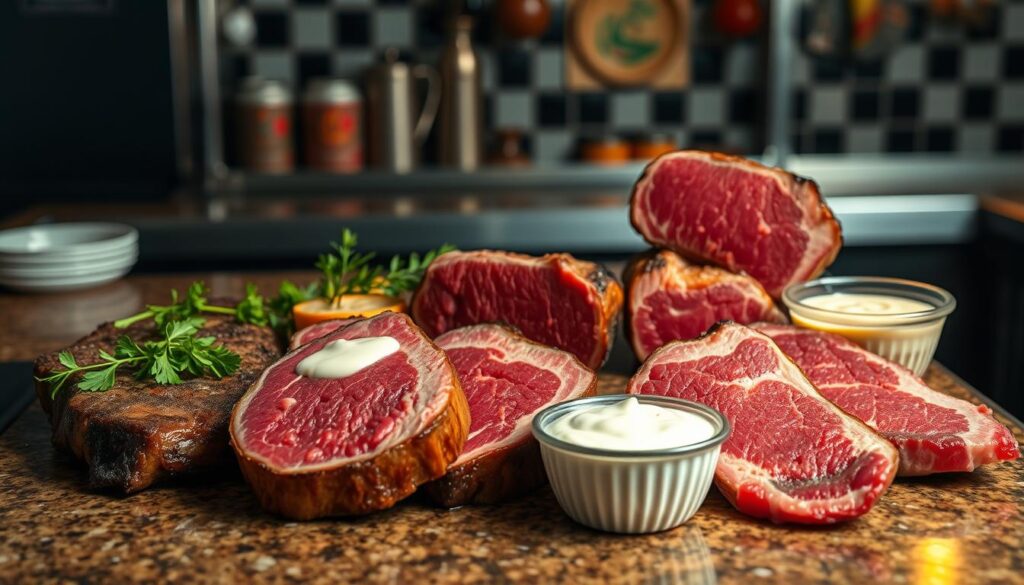
Choosing the right meat is key to a great steak sandwich. Each beef cut has its own taste and texture:
- Ribeye: The top choice for sandwiches, known for its juicy flavor
- Filet mignon: Very tender but leaner
- Top sirloin: Offers a good balance of taste and price
- Flank steak: Best when sliced thin against the grain
Alternative Protein Options
Your steak sandwich sauce isn’t just for beef. Chicken and pork are great alternatives that go well with your sauce:
- Grilled chicken breast: A lighter option that soaks up sauce flavors well
- Pork chops: Make a tasty glaze with tangy sauce
- Sautéed chicken: Great for trying out different sauce strengths
Pro tip: Always cut meats against the grain for extra tenderness. Freezing meat for 30 minutes before slicing makes it easier to get thin cuts for a memorable sandwich.
Serving Suggestions for Steak Sandwiches
Making the perfect steak sandwich is more than just a tasty sauce. The right bread and toppings can make your sandwich amazing. It turns a simple meal into a special treat.
Choosing the Right Bread
Choosing the right bread is key for a great steak sandwich. It should be strong enough to hold the meat and sauce without falling apart. Here are some top bread picks:
- Soft hoagie rolls (6-7 inches long)
- Sub rolls with a crisp exterior
- Ciabatta for an artisan touch
- French bread for extra crunch
Pro tip: Brush your chosen bread with garlic butter and toast it lightly. This creates a moisture barrier and adds flavor.
Toppings that Enhance Your Sauce
While Philly cheesesteaks are simple, you can add your own touches. Choose toppings that complement your homemade sauce without overpowering it:
- Caramelized onions
- Hot cherry peppers
- Pickled jalapeños
- Mozzarella cheese
- A drizzle of additional hot sauce
Pair your steak sandwich with crispy French fries or creamy coleslaw. It makes for a complete meal that will wow anyone.
Storing and Reheating Leftover Sauce
Keeping your homemade steak sandwich sauce fresh is key. You want to enjoy it for days, not just once. So, pay attention to how you store and reheat it.
How to Properly Store Sauce
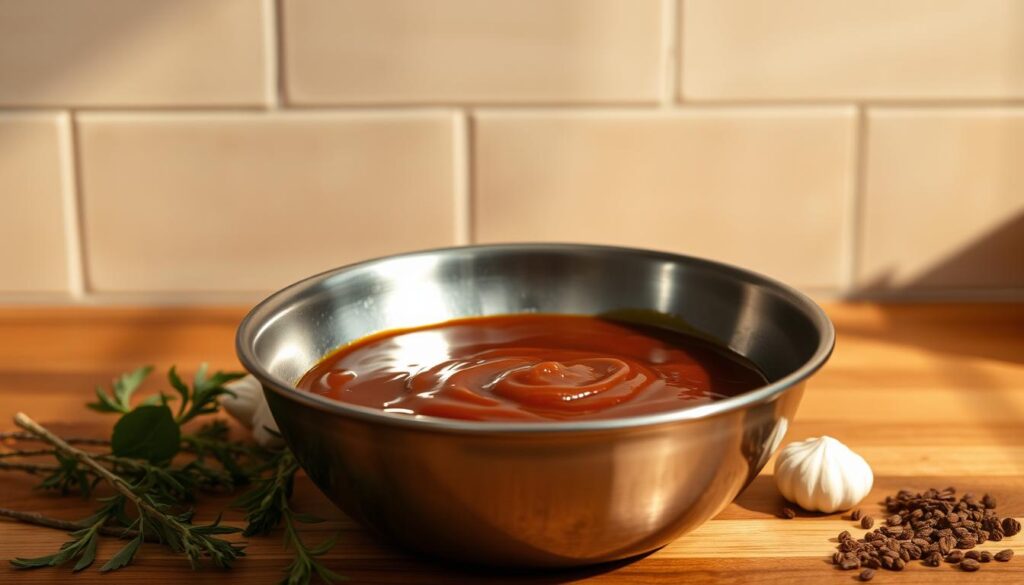
Storing your sauce right keeps its taste and freshness. Here’s what to do:
- Put sauce in clean, airtight glass containers
- Chill it right away after it cools down
- Enjoy it within 4-5 days for the best flavor
| Sauce Type | Storage Duration | Recommended Container |
|---|---|---|
| Tangy Sauces | 2-3 weeks | Glass jar with tight lid |
| Cheese-Based Sauces | 4-5 days | Airtight plastic container |
| Herb-Based Sauces | 1 week | Container with olive oil layer |
Tips for Reheating Without Losing Flavor
Reheating your sauce needs care to keep its taste and texture. Low and slow is the secret to a great sauce.
- Warm sauces on low heat
- Stir often to avoid burning
- Add a bit of milk if it gets too thick
- Heat in the microwave in 30-second bursts
Pro tip: Reheat each part of your sauce separately. This keeps their flavors and textures just right.
FAQs About Steak Sandwich Sauce
Many people wonder about making the perfect steak sandwich sauce. They ask about storage, shelf life, and how to prepare it. This section answers the most common questions about your homemade sauce.
It’s important to know how to store your steak sandwich sauce. Most homemade sauces last 4-5 days in the fridge. Use an airtight container. Tangy sauces, like those with vinegar, can last longer.
Always check for signs of spoilage before using. Look for unusual odors or color changes.
How Long Does Homemade Sauce Last?
Keeping your sauce in the fridge helps it last longer. Different sauces have different shelf lives. Creamy sauces last 3-4 days, while vinegar-based ones can last up to two weeks.
Always store your sauce in a clean, sealed container. Use clean utensils when serving to avoid bacterial contamination.
Can I Freeze My Steak Sauce?
Freezing your steak sandwich sauce is an option. Tomato and vinegar-based sauces freeze well for up to three months. But, cream-based sauces might separate when thawed.
To freeze your sauce, use freezer-safe containers. Leave a small space at the top for expansion during freezing.